Heron Island, Great Barrier Reef, Australia
Showing posts with label Hamburg. Show all posts

Saturday, 7 September 2019

What I did on my holidays (VI) - Hamburg

The offer of a home exchange to Amsterdam provided an opportunity to try something I've had in mind for a while - to go back to Hamburg, but to do so by train. It's possible to do it in one day from London (I went straight through on the way back, without too much discomfort or boredom), but I didn't fancy arriving there in the evening, so stopping off somewhere en route would be called for - so starting out from Amsterdam (four hours away) made sense.

What I particularly wanted to see was the building with the roof like wave-crests - the Elbphilharmonie.

Built on to an old warehouse at a key point where the old warehouse and docks area pokes out into the Elbe, it's a complex of (very expensive) housing, offices and car-parking surrounding two new concert halls. As with so many new projects, it took longer and cost more than expected, but the end result is an impressive and austerely beautiful space, all off-white stucco and unvarnished oak, with airy foyers and staircases open to panoramic views on both sides, and an outside observation platform running right round the building (no photos allowed inside for the general public, so these are borrowed from elsewhere):

Photo from BASWA Acoustic
And inside the concert halls, it's not just the open-ness of the main hall that impresses:
Photo from the Suddeutsche Zeitung
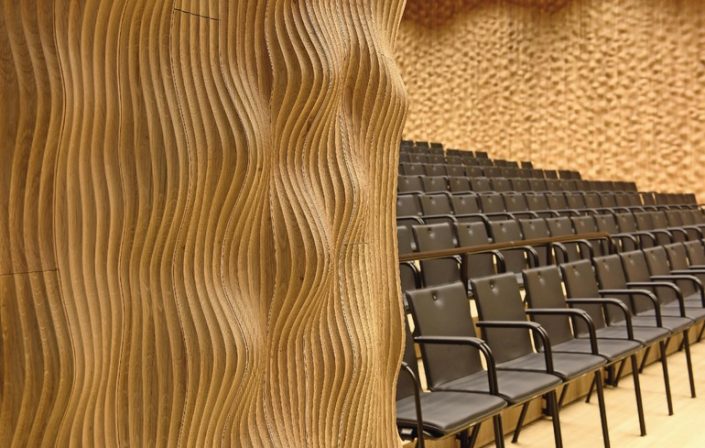
so much as the seemingly organic, almost Gaudi-esque, shapes lining the walls:
Photo from Sudkurier
Photo from dds-online.de
But they're not just there for the visual or tactile interest - they're all part of the acoustic design. Apparently (according to the guide), every ridge, gully and cell is part of a carefully worked out plan for each small area of the walls, with every panel planned for its specific location and no two panels entirely the same. Not that (as with other concert halls) there wasn't debate about how it all sounded, leading to some later modifications.  Not having had the opportunity, in the time available, to get to a concert, all we could hear of the acoustic, apart from the guide talking, was a test run of the emergency announcement and some snatches of recorded music as the sound engineers did some tests of their own, which all sounded fine to me (but what do I know).

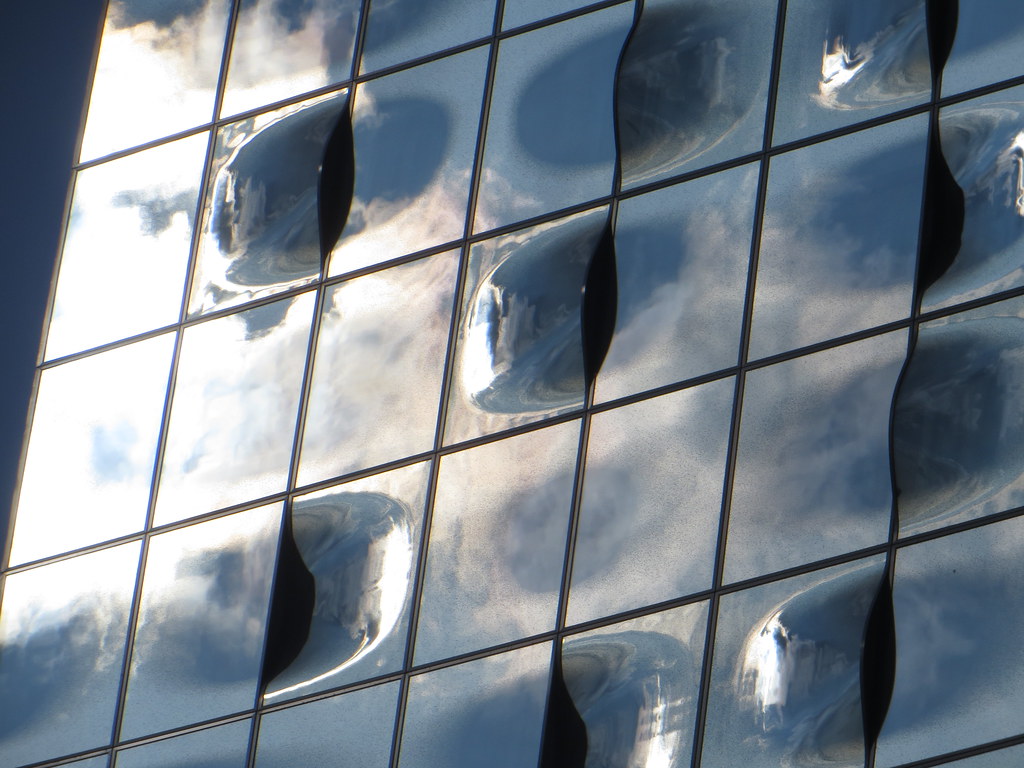
The tour over, we were free to take photos around the outside, where the wavy glass exteriors offered some interesting reflections:


Wednesday, 16 October 2013

Some more photos of Hamburg

It isn't all about work and money: the merchants and citizens liked spending their money on the mind and soul as well.

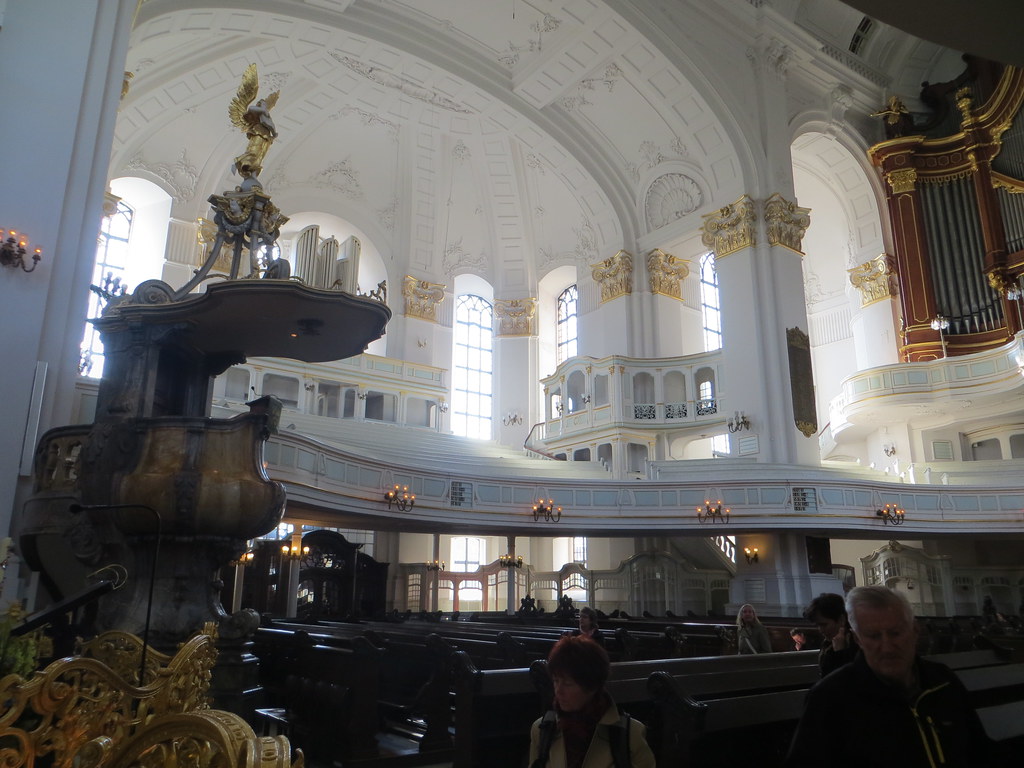
The harbour panorama is dominated by the stern-looking tower of the Michaeliskirche, but inside, the church is far less austere and more baroquely curvaceous than you might imagine a Lutheran church to be - with a grand organ case in each of the three galleries. But a gallery window, high in the ceiling, looks distinctly like part of an eighteenth century ship: and the whole church is as broad in the beam and curvaceous as the freighters that brought the wealth to build it.

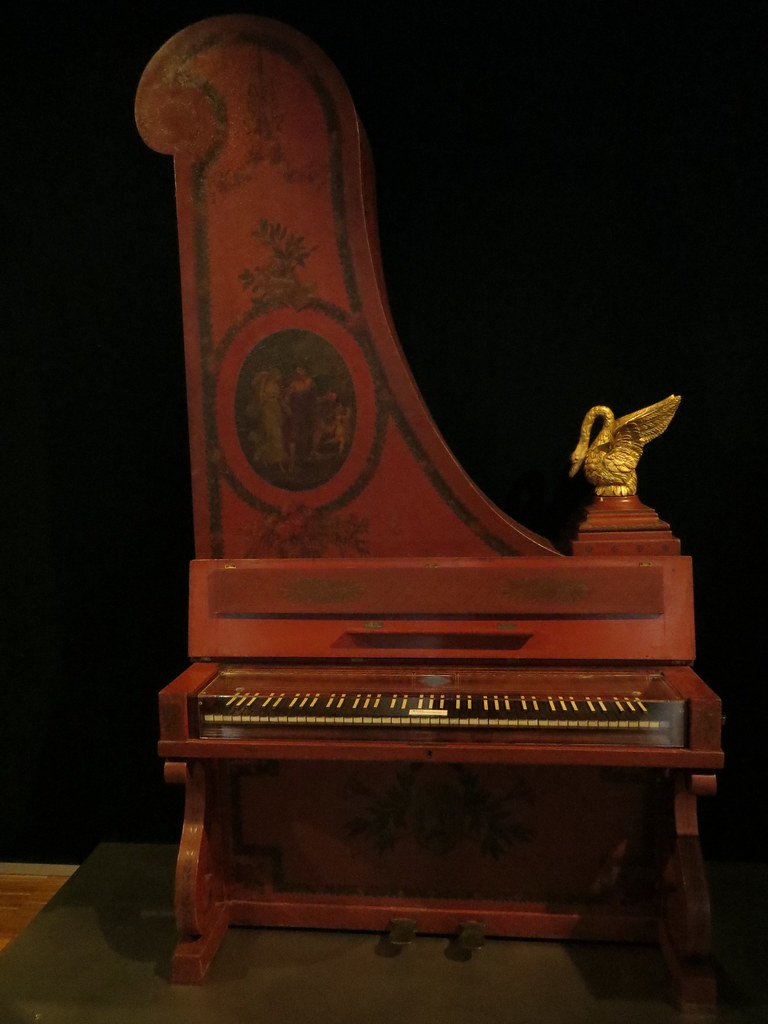
And as all good nineteenth century citizens did, they endowed art galleries, with the Kunsthalle's large collection containing some of the best-known Caspar David Friedrichs, which was a bonus for me. Not far away, the Kunst und Gewerbe Museum is a smaller version of the Victoria and Albert Museum. It has a large collection of musical instruments, including the weird and the wonderful; and on this occasion a special exhibition devoted to what constitutes bad taste - with an opportunity for members of the public to contribute their kitschy items (on condition that they take one of someone else's away with them).

The purely functional has its decorative element too. Not a few old office blocks still retain some art nouveau decorations and entrances; someone's used an escalator in the underground to create a scrolling thought for you to ponder.
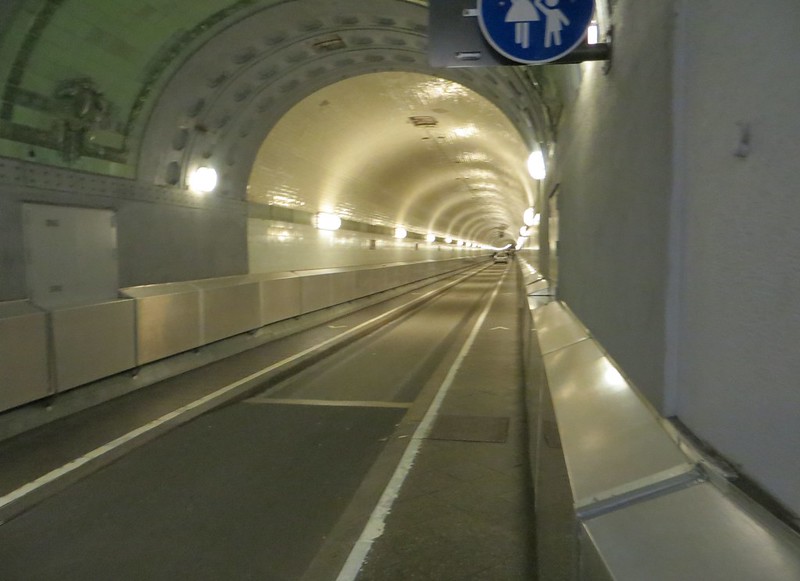
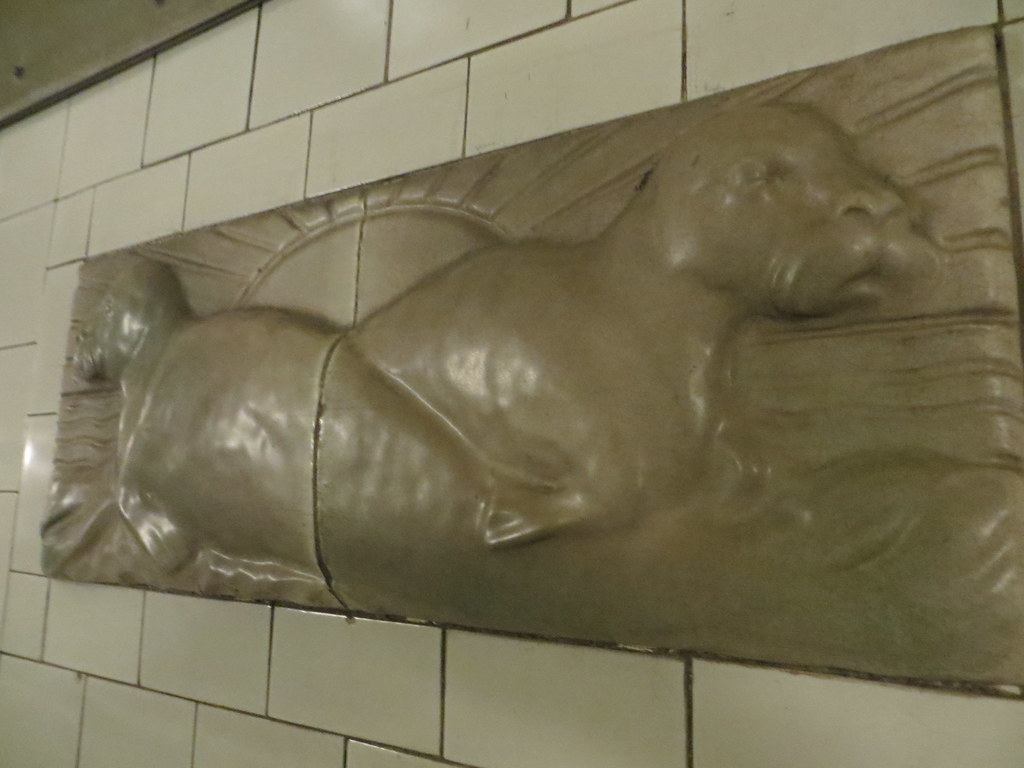
And even the Elbtunnel, with its massive lifts for cars as well as pedestrians is lined with ceramic panels depicting its marine environment, including rats chasing round a workman's boot):

Monday, 7 October 2013

Thank goodness for digital TV. I'd have to live here for quite a while before my German could cope with extensive idiomatic and dramatic conversations, so for a lot of TV programmes only an outline gets through. Without, that is, the option for subtitles - "German for the hearing-impaired" (which, in German, I suppose I am). They might not run exactly in synch with the dialogue, but at least I can now work out what someone was actually saying a little while ago. I have to say, though, it doesn't actually improve the basic quality of the programmes themselves: subtitles or not, slow and drippy romantic soaps and formulaic cop shows are still the same.

Sunday, 6 October 2013

Once round the lighthouse!

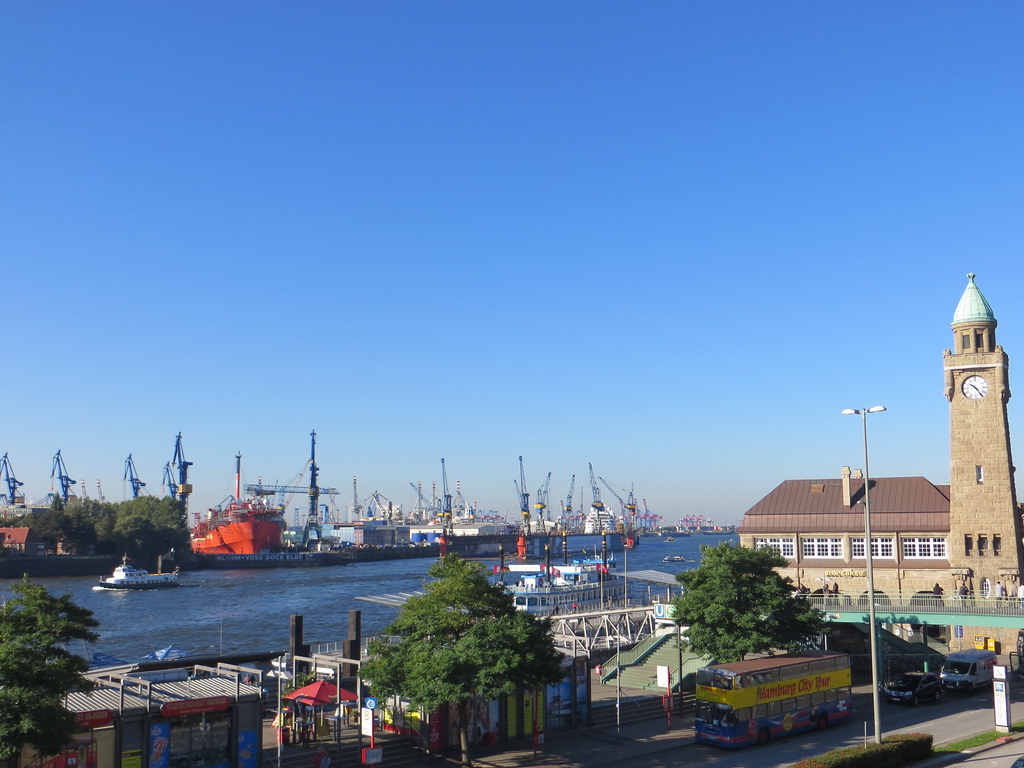
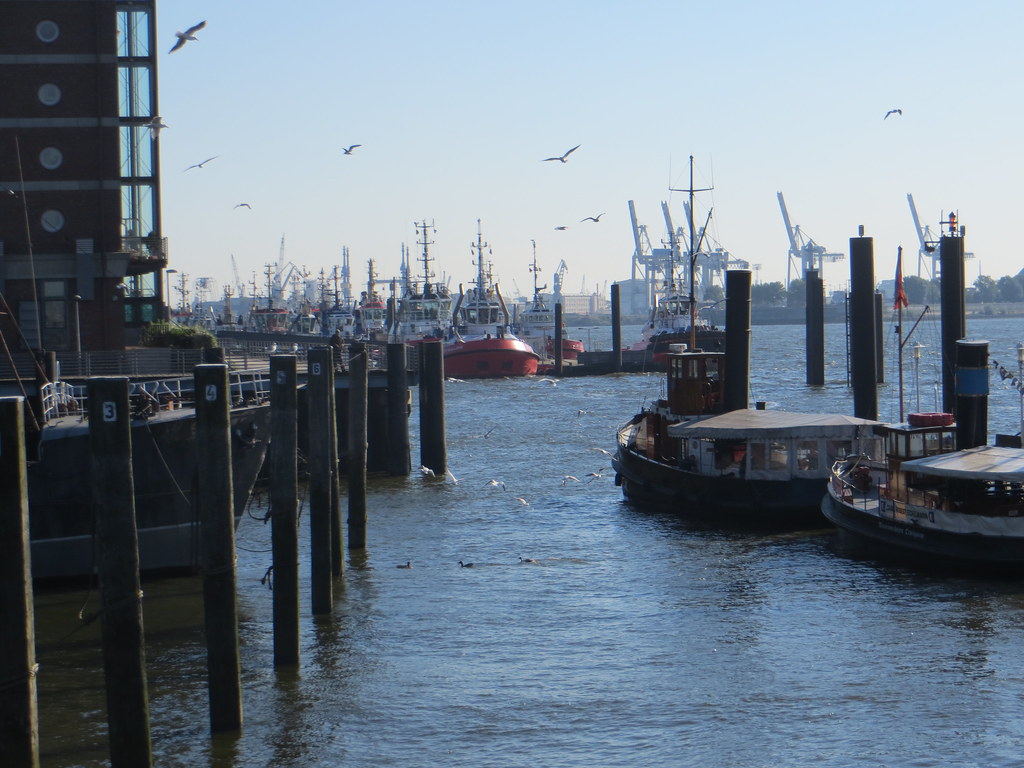
Well, not quite, but there is a great deal of Hamburg harbour and port to be seen, and direct from the city centre. The cheap way to get a tour is to take one of the public service ferries - it won't take into into all the nooks and crannies of the port, but you still see a fair amount).

There's still a visible historical chain of harbour development, from little creeks (or "fleets") running up to what would have been merchants' houses, then to
dedicated warehousing and docks (the nineteenth-century versions of which are now offices, flats and a very visible number of oriental carpet shops), these in turn being supplanted by a modern "Harbour City" set of developments, like so many other cities, complete with tourists gliding past on Segway tours. One difference here is that the housing includes plenty to rent, and the "anchor" building is a striking and gigantic new concert-hall, music education centre and public cultural space (complete with wavy roof)

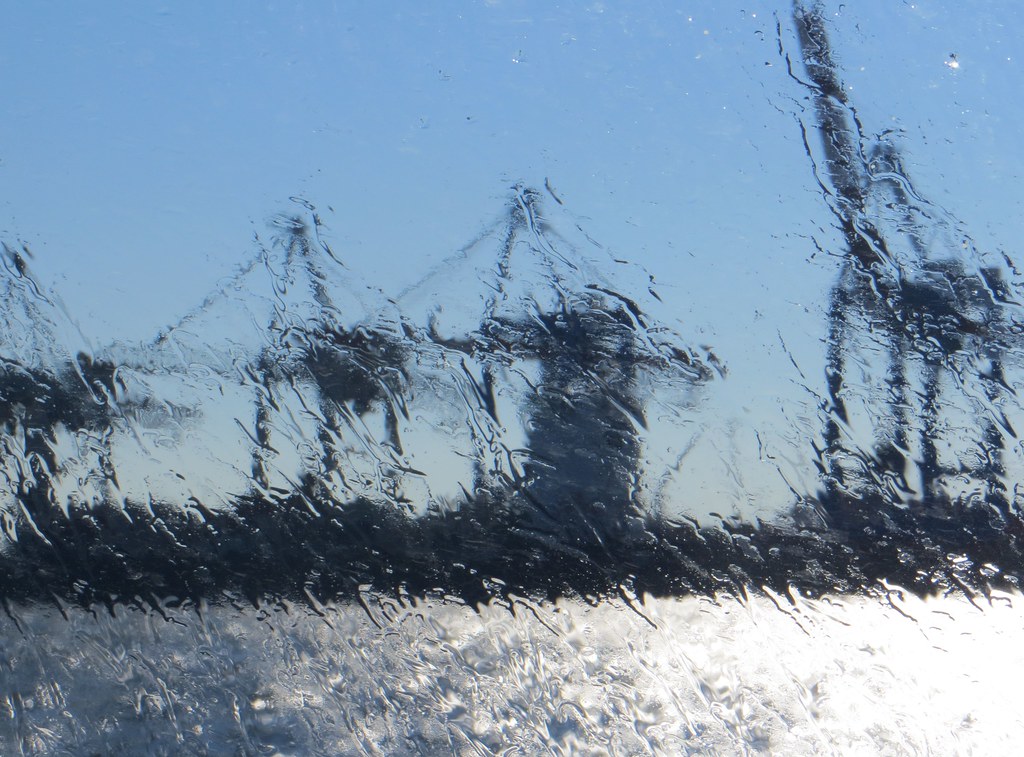
But what is most striking is the expanse of modern dock and port facilities on the other side of the river, with cranes and wind turbines and
other industrial facilities stretching as far as the eye can see.

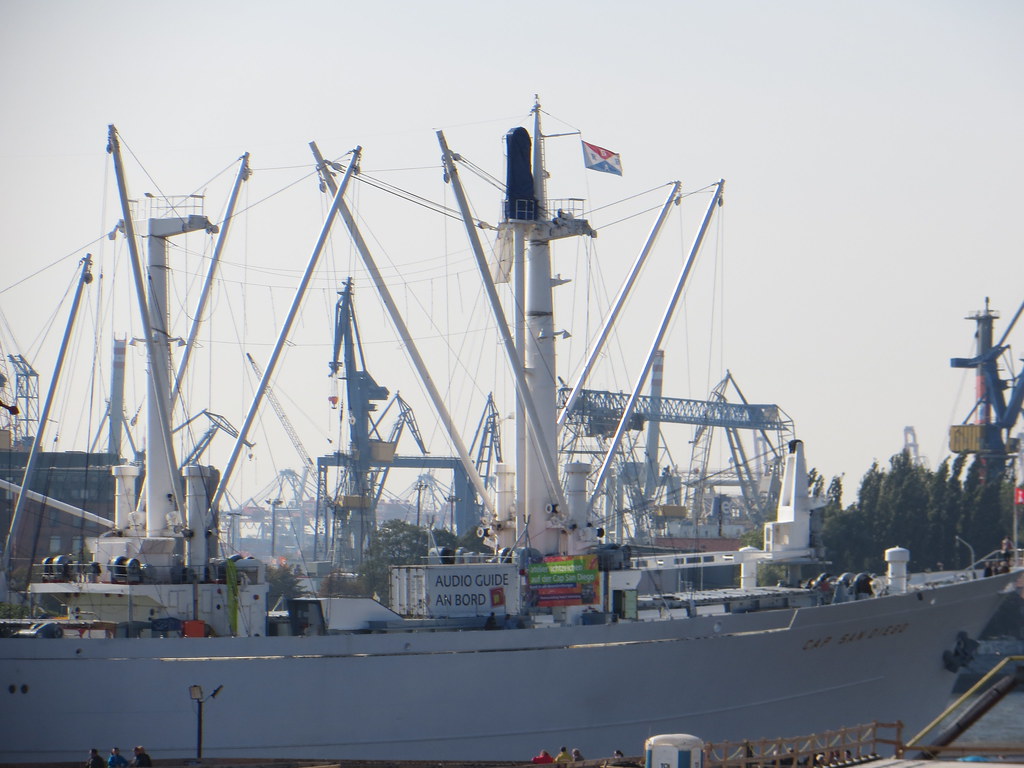
What seemed, on my childhood visit to the Pool of London, to be huge freighters (one last remaining example sits here as a museum and visitor attraction) have now been replaced by bigger and bigger container ships. Where London's docks moved out to the sea to accommodate the new behemoths, in Hamburg it's possible to live in the local millionaires' row, stroll on the beach, admire a museum collection of traditional sailing boats or visit a Soviet-era submarine, while watching a ship with thousands of freight containers on board coming right into the city centre, or some massive cruise ship being refitted on the other side of the river.

Saturday, 5 October 2013

Sunshine

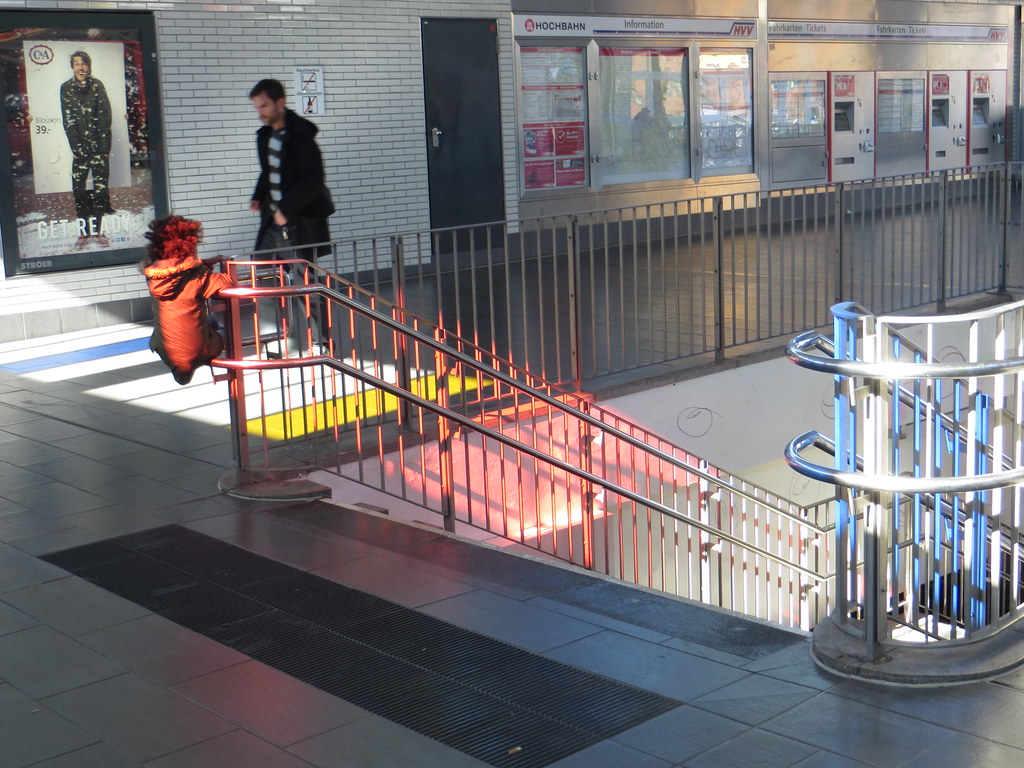
A little autumn sunshine through some simple coloured panels can change the most mundane and functional aluminium and grey surfaces:

Friday, 4 October 2013

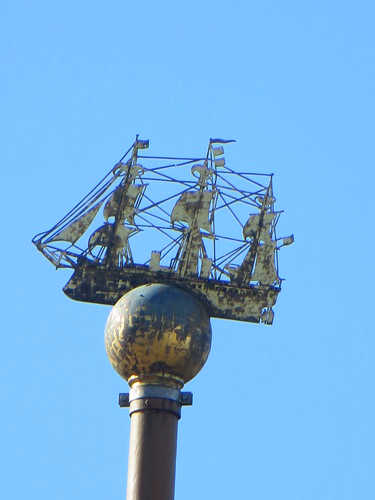
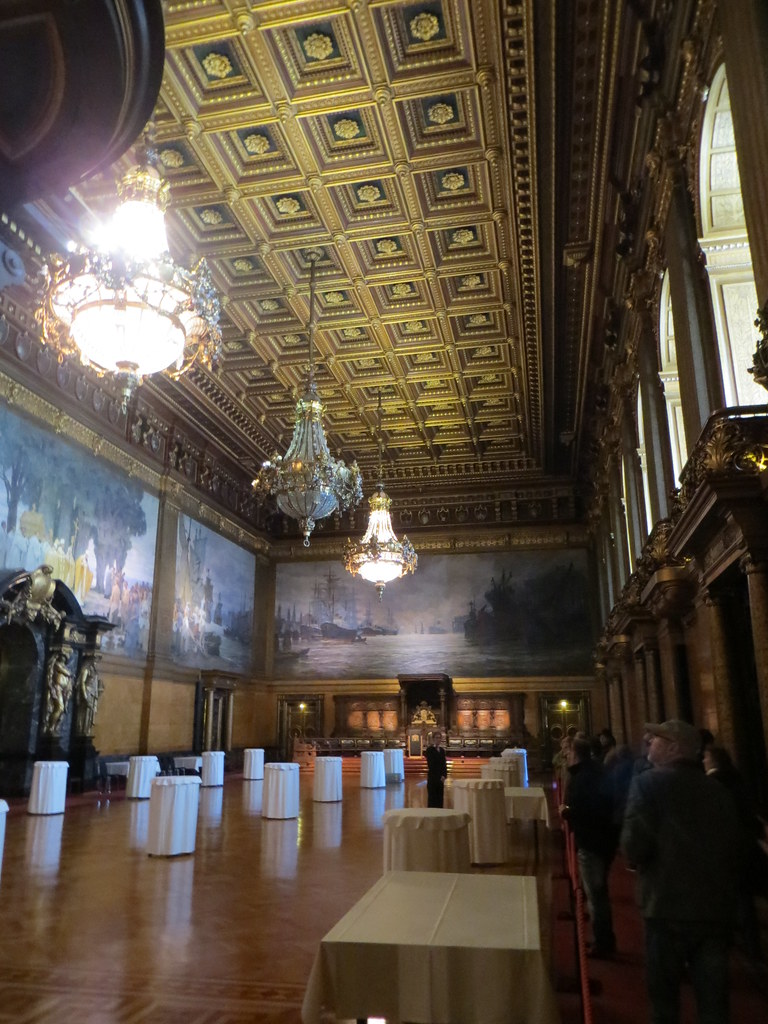
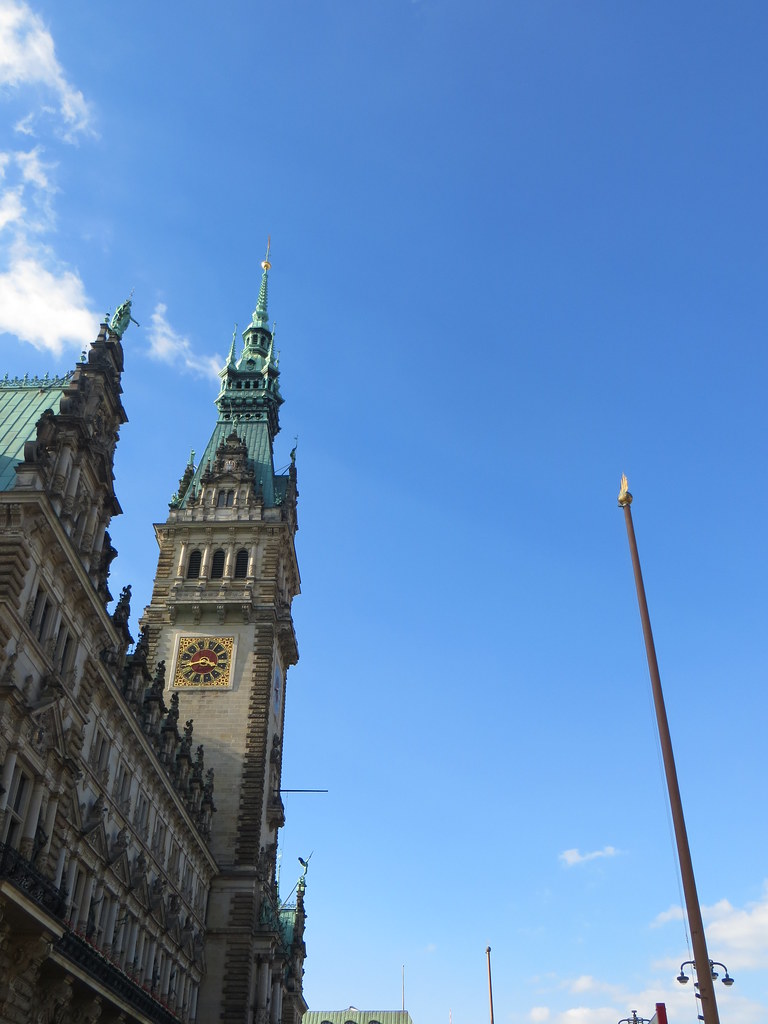
This ship on a stick actually sits on top of one of the tall flagpoles outside the even huger Rathaus in Hamburg. It underlines, as the Rathaus itself does, that like the other Hanseatic cities, its strength is in trade, business and craft. At present, there's a display in the entrance on all that the relevant trade organisations do to support the training and promotion of independent craft and artisan trades in Hamburg: as their predecessors have done for centuries, to judge by the opulent display in the public rooms of the building as the tour guide takes you round.

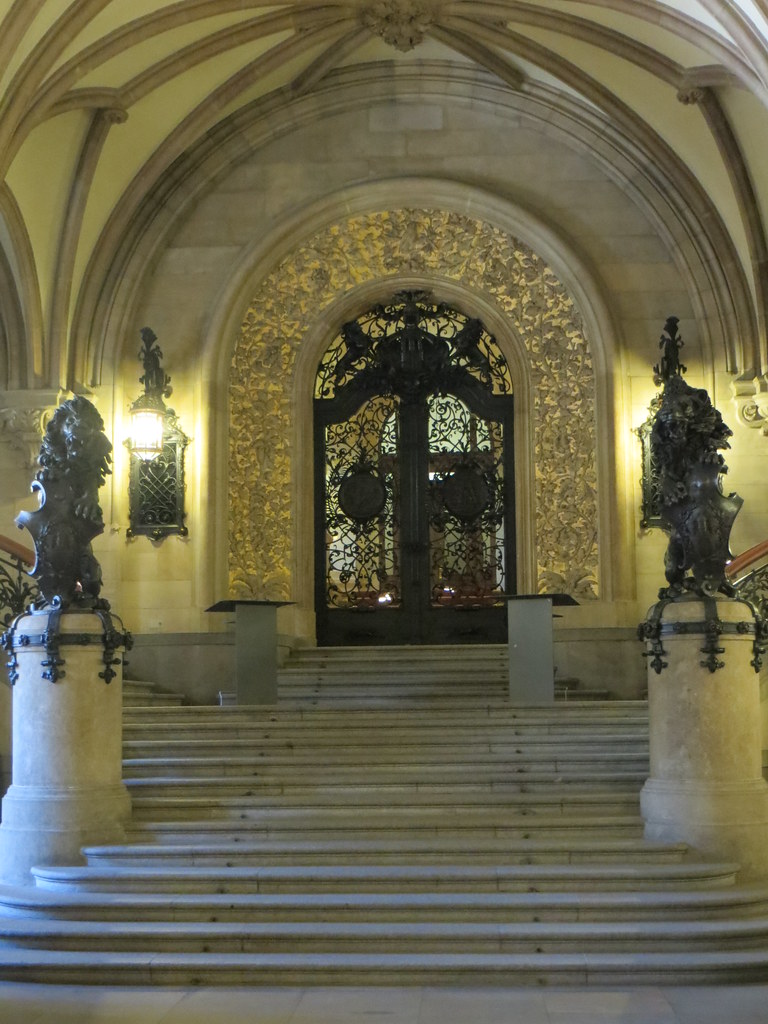
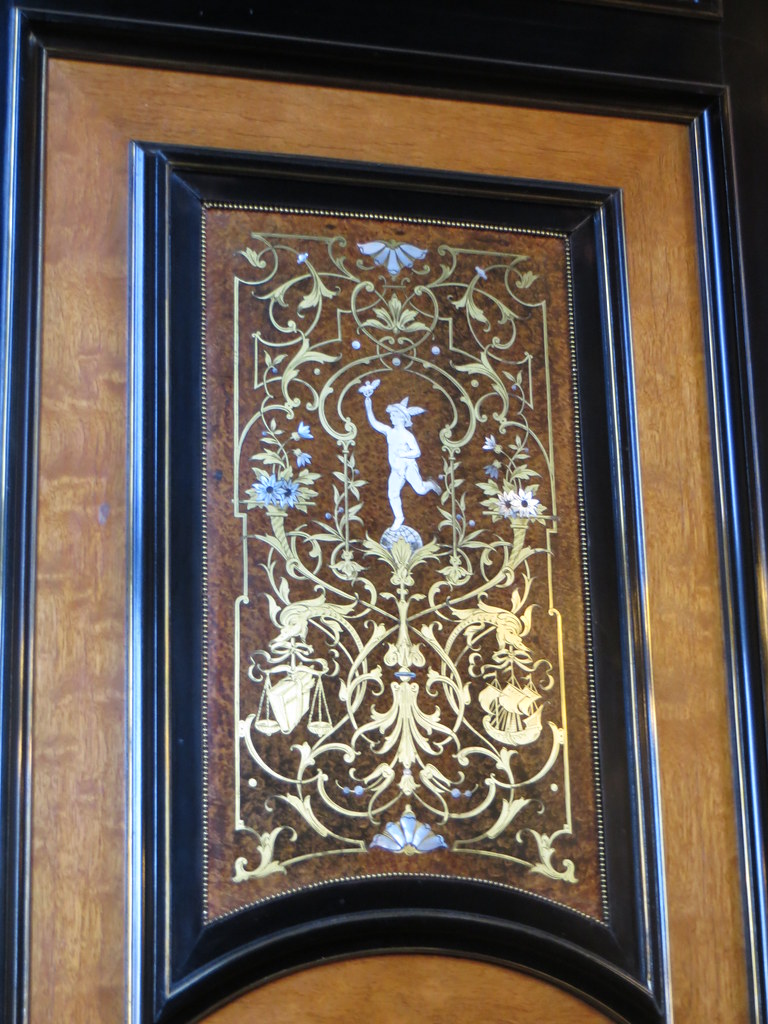
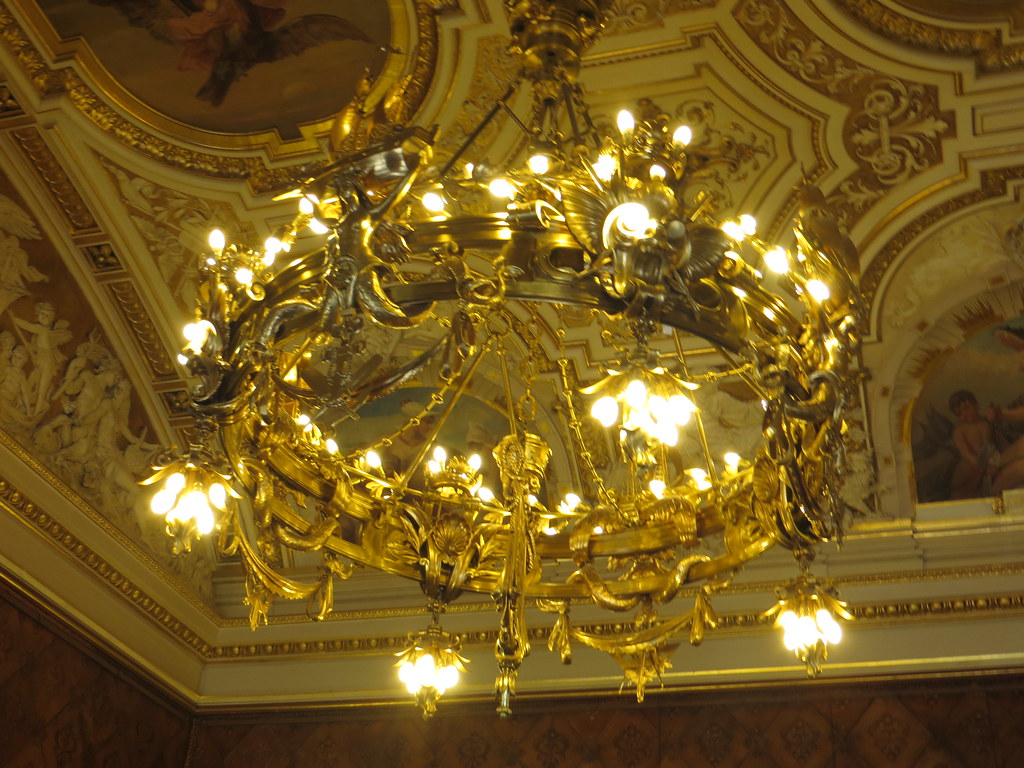
As it happens, the mediaeval heart of the city was destroyed in a great fire in 1842, the old Rathaus having to be sacrificed to create a firebreak, so this building dates from the same era as the equally show-off Victorian town halls of the more recent industrial cities of Britain. From the intricate casting of the entrance gates, rooms and staircases lined with marble, onyx columns, intricate carving and inlay on doors and panelling, felted and leather wall coverings, ornate candelabra, plush upholstery and grandiose paintings and statues: all underline what a confident and competent company of citizens can do. Royal patronage and pomp gets a bare nod here and there.

Also as it happens, this building was barely affected by the other great firestorm on the city in the Second World War. There was a bomb that landed in the square outside that could have done severe damage; but it failed to explode. The detonator is on display in one of the meeting rooms. It looks like any other piece of finely-machined precision engineering: though no-one actually said so, its failure could be a symbol of what's happened in the long rivalry between us - and why.


Tuesday, 1 October 2013

Three stops from Schlump

Perhaps someone who lives near Mudchute is in no position to find other cities' station names amusing, but my current home exchange to Hamburg is on the U-Bahn line that passes through the aforementioned Schlump to get to that monument to civic pride, the imposing 19th century Rathaus, or indeed to anywhere much.

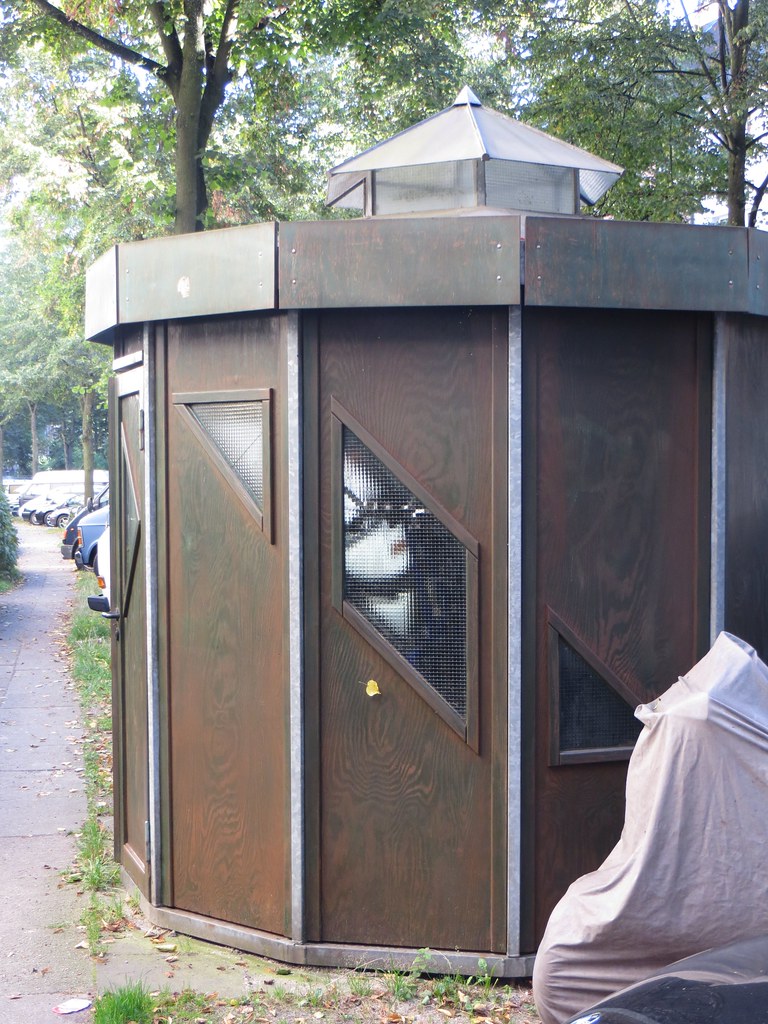
Unless, that is one were to cycle. It's evident that a lot of people in this very pleasant suburb do: so much so that there are rather elegant on-street lockable garages for bikes: