Heron Island, Great Barrier Reef, Australia
Showing posts with label Amsterdam. Show all posts

Saturday, 1 February 2025

L'Après-midi d'un phone

 The years I've been hoping for an opportunity to use that as a title, though when it came, it wasn't initially the best of moments. 

On a spur-of-a-moment weekend away in Amsterdam, I lost my phone. It was a sickening realisation at the time, but as it happened, I had back-ups -  my old phone to access at least the internet, a separate bank card in a different place, and a helpful hotel reception for the necessary phone calls. It seemed most likely that I had somehow dropped it on a tram: Amsterdam transport authority has an online lost-and-found system, so I could put in a report straight away, even though they wouldn't be checking over any found items till I would be well on my way home on the Monday. 

Sure enough, on the Monday, they posted a photo that looked like my phone, and they sent an email suggesting it matched, so I filled out the claim form with as much identifying detail as I could recall. On Tuesday, they emailed to say it all matched and provided a link to book and pay for it to be delivered back here. And so it was that it came back on Friday, none the worse for its adventures. The wonders of the internet - and the honesty of whoever turned it in!

As for the weekend - well, the weather could have been better. I did manage to take a few photos at the Maritime Museum before the phone went its merry way:


The 18th century royal barge, used for special occasions until the 1960s

Some figureheads


Wednesday, 14 July 2021

How time flies.

It's that time of year again. I wonder how long it will be before I see Paris again.

Friday, 6 September 2019

What I did on my holidays (V): Amsterdam - cycling

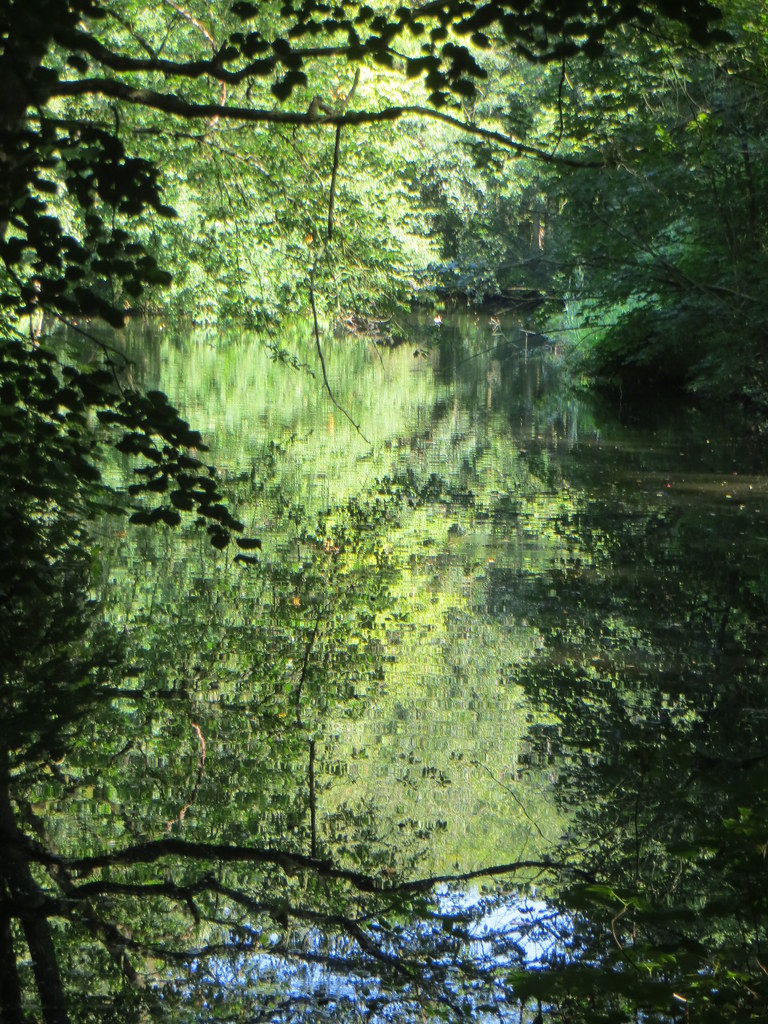
I have cycled around central Amsterdam before, but not this time - public transport and walking is quite enough for getting around, not to mention the bother of parking (and remembering where you've parked it), plus all those hump-backed bridges. But looking out from the centre is a much easier proposition. Hiring a bike at the Amsterdamse Bos gives you a typical "omafiets" ("grandma bike"), with sit-up and beg handlebars (comfortable), completely enclosing chainguard (hooray) - and back-pedal brakes (erm...takes a bit of time to embed them as an instinctive use - so it's just as well this is all or nearly off-road and along winding woodland paths:

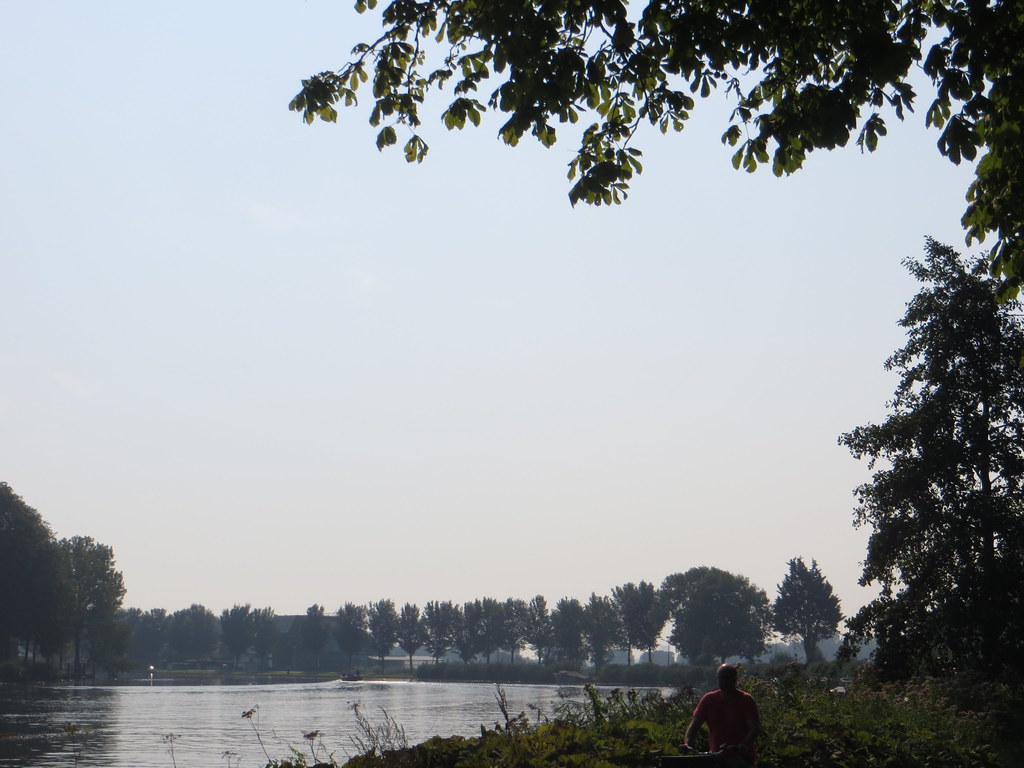
On another day (the hottest of the year, as it turned out), something a bit more adventurous (but not very): down the Amstel river, past Rembrandt at the sort of spot where he liked to sketch:

and the sort of views he liked to sketch:

Monday, 2 September 2019

What I did on my holidays (IV) - Outside Amsterdam: Maeslantkering


One half of the great storm surge barrier across the estuary of the Maas (Meuse) at the Hook of Holland:
A model in the Keringhuis to show how it all works
The high point of this trip's watery theme was to see something of the massive flood control works across the different estuaries in the great delta across the south of the Netherlands.

Here at the Hook, these two great arms can, at a few hours' notice (automatically triggered by sensors out at sea), be floated in their dry docks, then out across the river to be sunk on to underwater sills, so as to hold back any anticipated storm surge, such as the one that caused such devastation in 1953. Once the danger is passed, the arms can be pumped out and floated back into their docks.

The Keringhuis is the information centre in that modest-looking grey shed, exploring and explaining (with a strong orientation towards engaging children) the problems and issues involved, not only in holding back flooding from the seas (something the inhabitants of the Netherlands have had to do since human habitation in the area first began), but also coping with flood waters coming down the rivers from elsewhere in Europe, and with periods of drought, and all while keeping open the trade routes into Rotterdam.

So it's a complex series of problems, with different answers for different locations, and not just in the different designs of massive barriers. Where once the answer was, almost, as many dikes as possible, now it's a matter of managing water in and out. Increasingly they look to work with nature, for example, encouraging the movement of coastal sandbanks so that beaches and dunes are built up, or in places "de-poldering" land so that surplus river water can be stored in lakes (which has meant re-settling people, the difficulties of which are rather skated over in the exhibition) and released as necessary, and other parts reverting to marshy nature; some dikes, being largely peat, dry out in increasingly hot, dry summers, so they have to be (perhaps counter-intuitively) watered to stop them crumbling away.

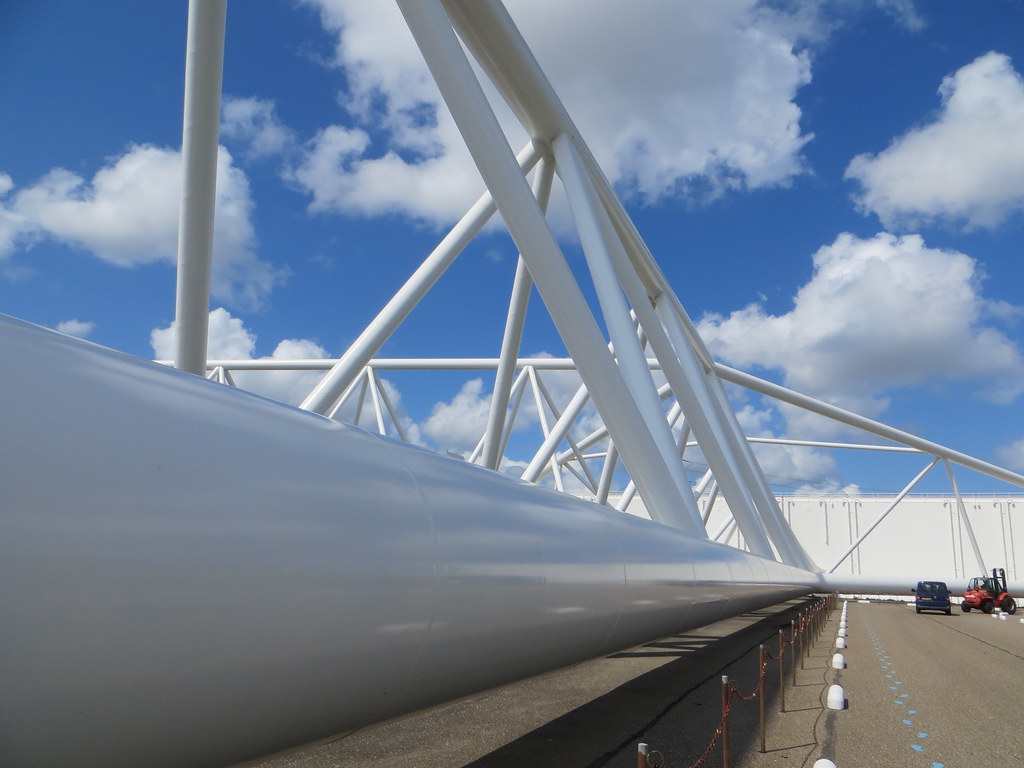
The statistics and superlatives of the engineering are impressive, especially if you book a guided tour, where the guide will take you under the main structure:
Those lower struts have to be regularly repainted on the inside as well as out - and the steel is apparently 7cm thick.
But what is even more striking is the way such a massive and complex long-term plan was developed and expanded over decades by (as far as possible) consensus across the different levels of government, with each having an agreed set of functions and responsibilities. It's a similar sort of long-term process as the development of cycling infrastructure across the Netherlands over the last 40 years or so. And now, they're developing an international network of those cities and countries that face similar problems (London, of course, where our own barrier wouldn't have been finished without Dutch expertise, New Orleans - no surprise there - St Petersburg, and so on). Which is rather encouraging as we face whatever climate change is going to bring us.

Sunday, 1 September 2019

What I did on my holidays (III) Outside Amsterdam - Enkhuizen

Having some time to explore more widely than the usual round of things to do and see in Amsterdam, this trip took on something of a watery theme.

An hour or so north is the pretty town of Enkhuizen, on the edge of what was once the Zuiderzee, till they closed it off in 1932 to reduce the dangers of flooding from the North Sea, and forming the IJsselmeer and some substantial areas of poldered land.

Nowadays it is a magnet for plenty of leisure sailors.

One can only guess at the combined value of all those boats. Once, the town's inhabitants liked to leave the marks of their modesty as well as the source of their prosperity:


Of course, safety came at a price: major changes to the way of life in the villages around the affected coast as fishing declined, the war and occupation came, and small market gardening faced increased competition from larger operations.

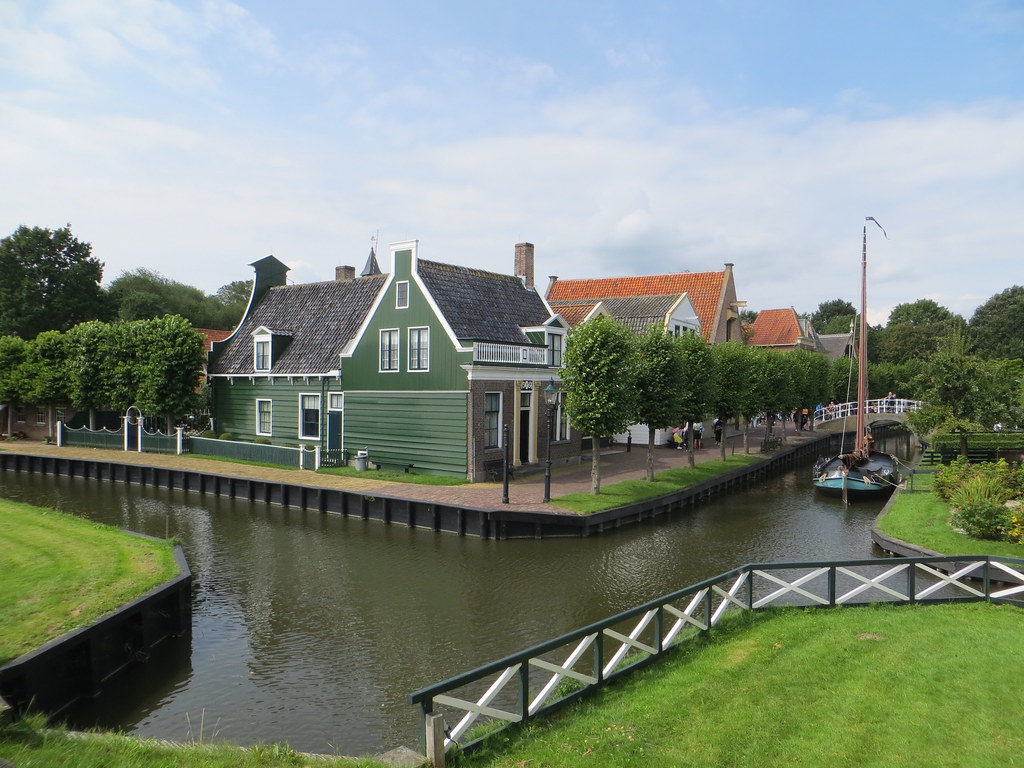
Hence the Zuiderzee Museum, a collection of reconstructed village houses and other buildings (church, school, pharmacy, post office, smithy, laundry and so on) arranged on the same sort of plan as a typical village, on the edge of the still seemingly vast expanse of water, with plenty of craft sailing by as they did years ago. The interiors are smaller and darker than the photos suggest, to the point that my entering an open front door gave another visitor quite a fright as, at just that moment, she came out into the hallway.


There's an indoor museum displaying all sorts of objects and artefacts demonstrating the different trades, pastimes and costumes of the different villages. Just as the old, relatively isolated ways of life were starting to dissolve into standard modernity, the tourism promotion authorities chose just those costumes as a symbol for all that is  Dutch, so these will not be entirely unfamiliar:

Tuesday, 27 August 2019

What I did on my holidays (II)

Amsterdam continues to offer its usual variety:

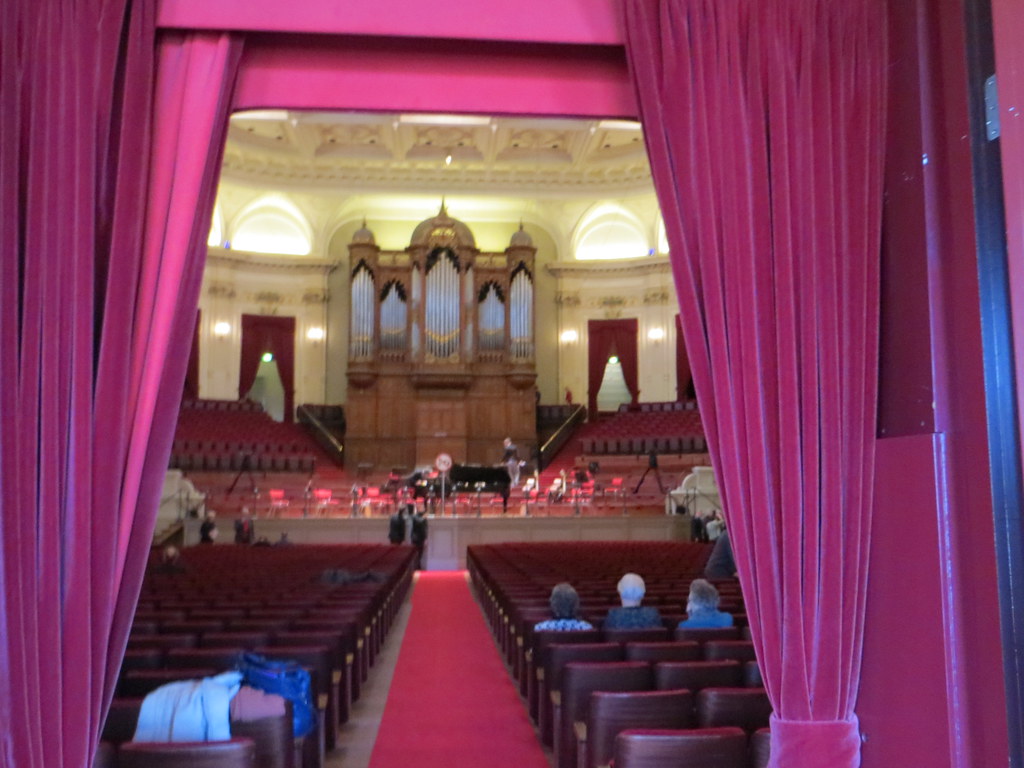
The orchestra assembles at the Concertgebouw


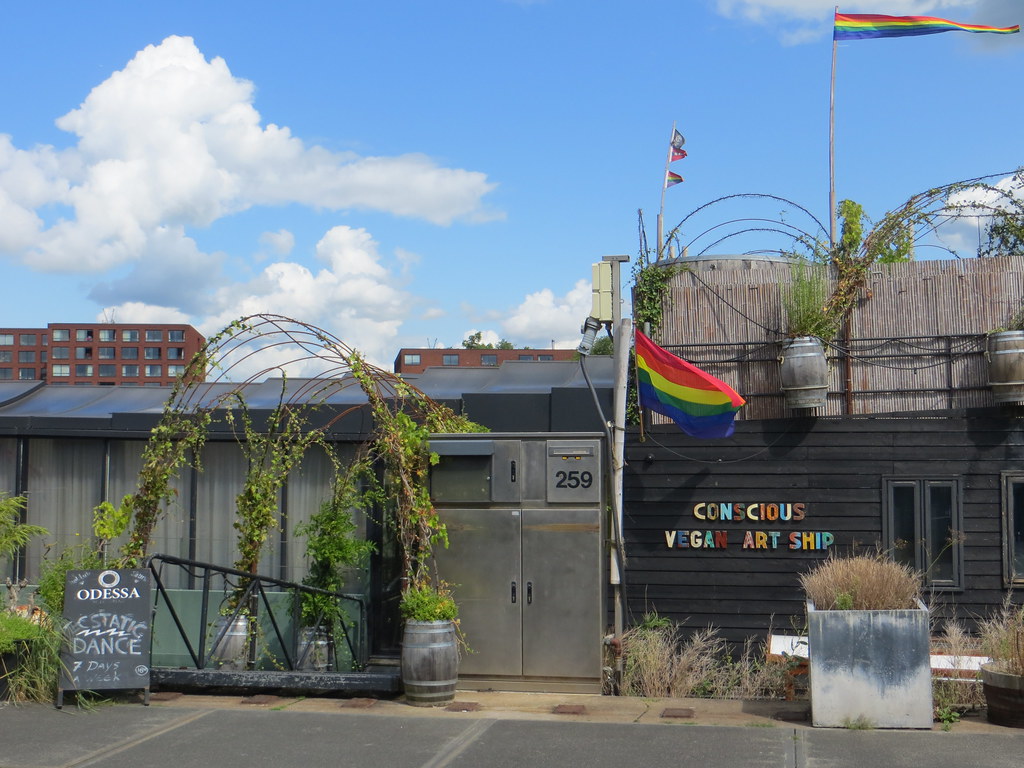
On the KNSM-Eiland, an area of redeveloped docks and warehouses. Presumably conscious vegans have the stamina for ecstatic dance seven days a week


At NDSM - old warehouses now used as art studiois and for a monthly monster (but rather sad-looking flea market/boot sale


Churchill-Laan    

Other than the fact that this was outside a water pumping station, I have no idea

Saturday, 22 February 2014

Amsterdam round-up (2)

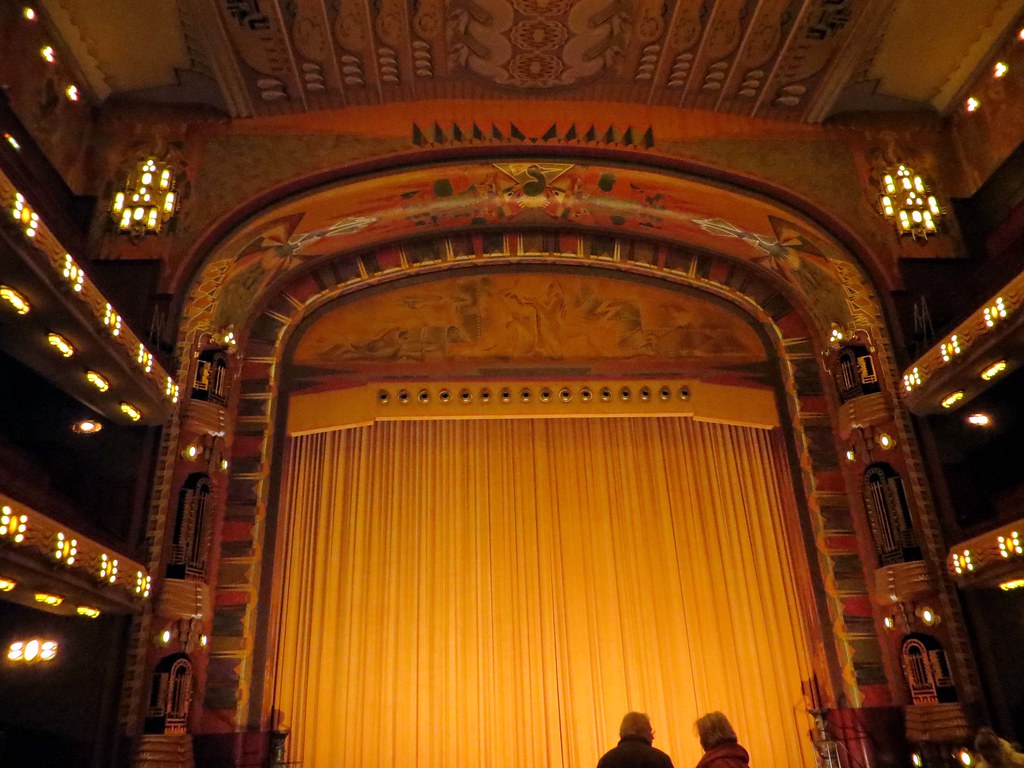
And here are two very different places of entertainment:

On the one hand, the 19th century's idea of solid worthiness for great music at the Concertgebouw (happily more relaxed and informal these days):


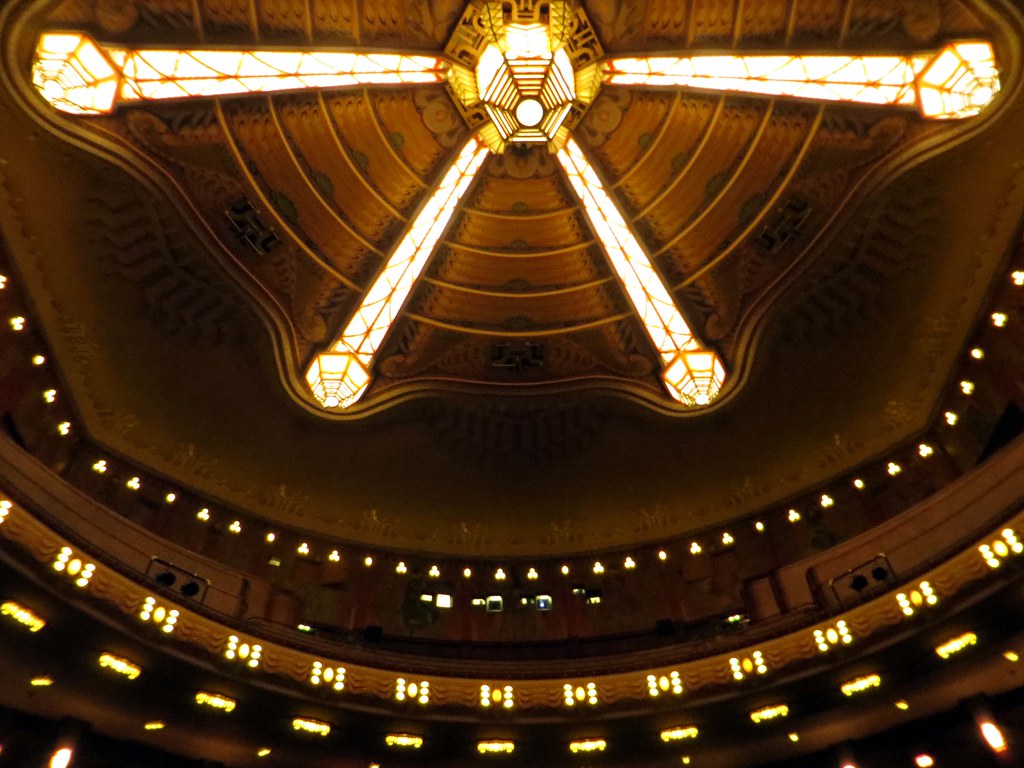
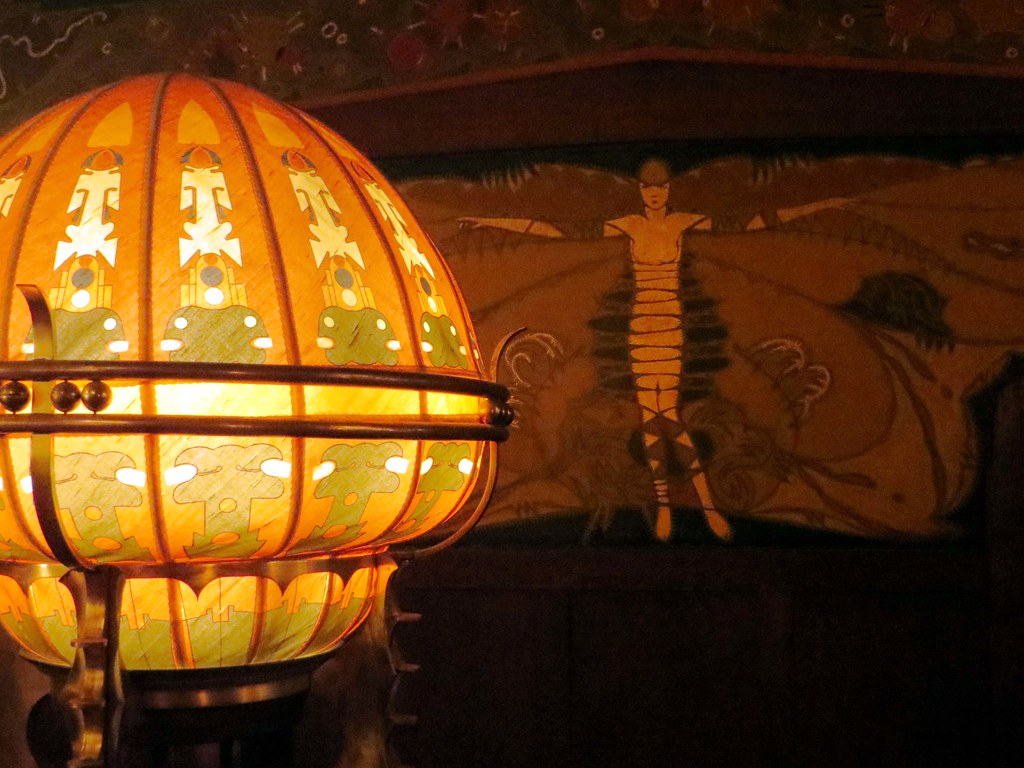
And on the other, the bordering-on-bonkers 1920s exuberance of the Tuschinski cinema, about which I've posted before :


Thursday, 20 February 2014

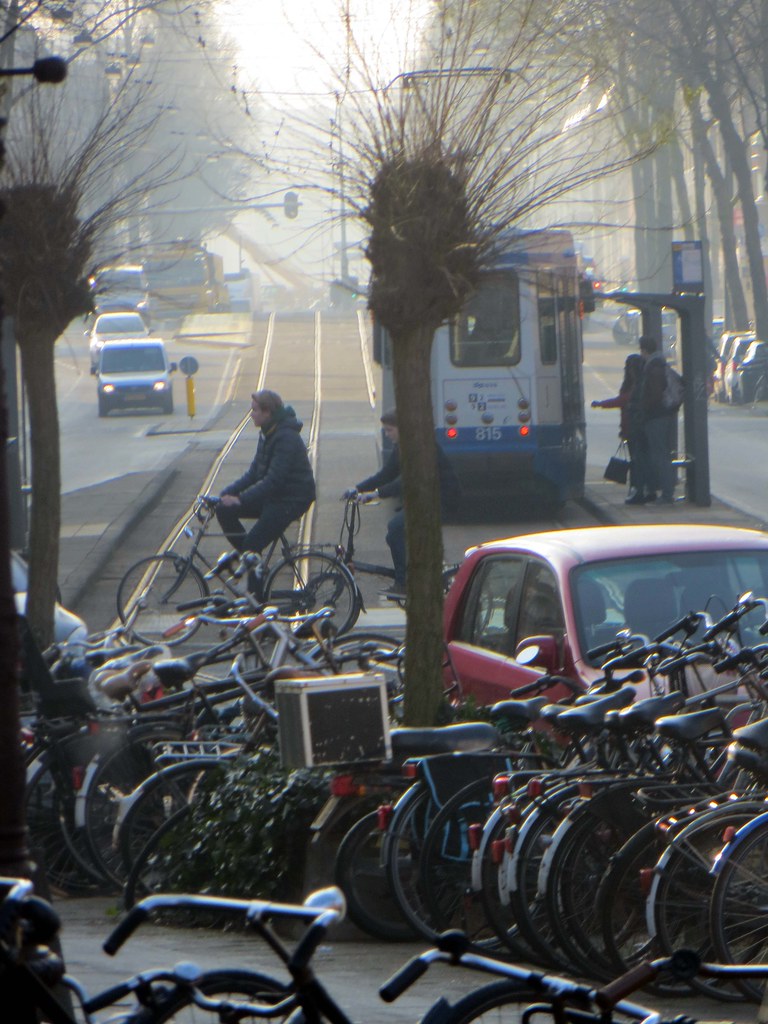
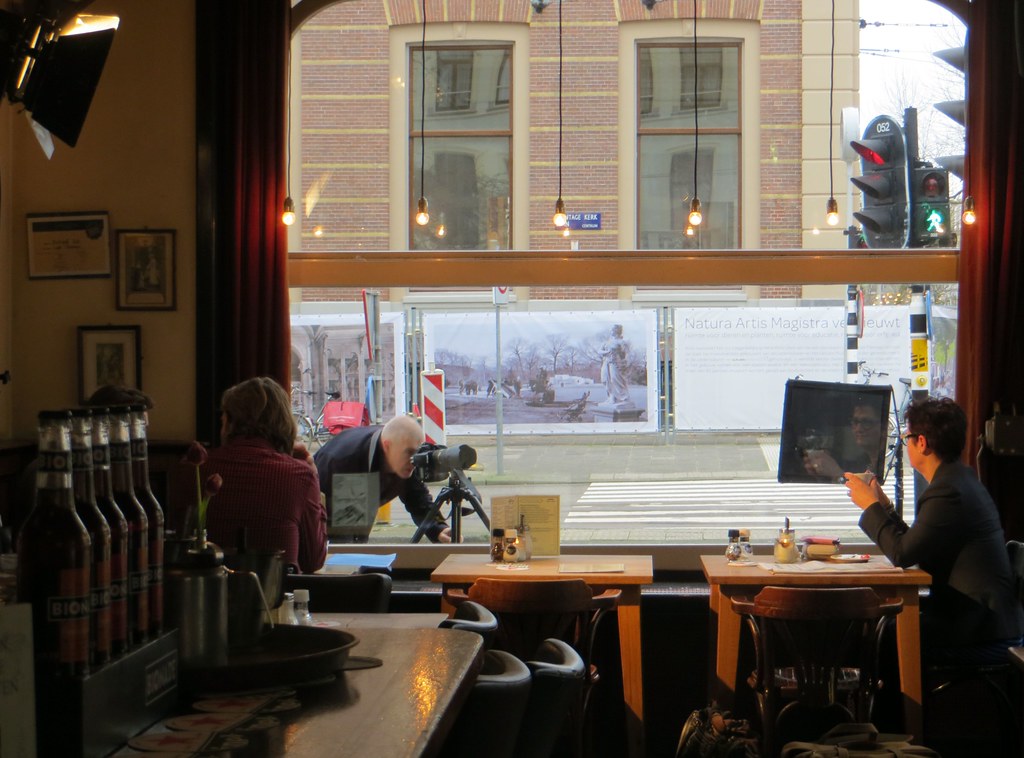
Finally getting round to tidying up photos from Amsterdam, I give you two scenes through café windows.

The first, though a rare burst of sunshine, lines up the expected trams and bikes. No surprises there - but what's happening in the other?

Was this for publicity for the café in question, or was this some local celebrity "seen enjoying a coffee in her favourite café" for some magazine profile, I wonder? You can make up your own stories.


Wednesday, 22 January 2014

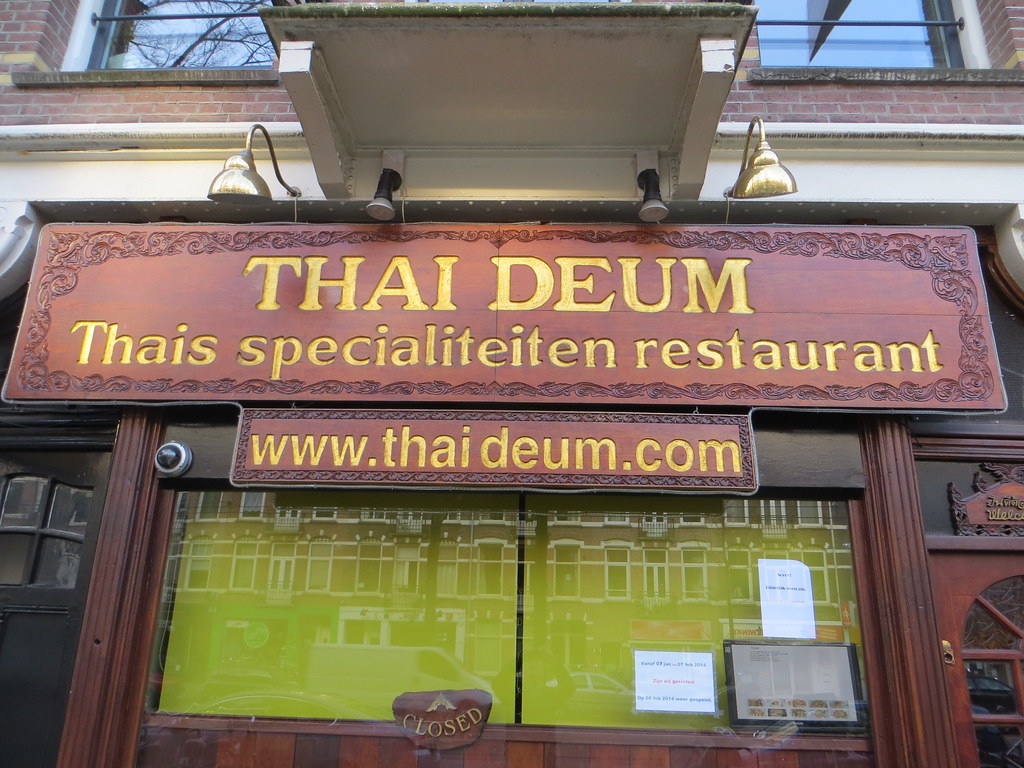
As you might guess from this photo, the Dutch quite like punning names for businesses, just as much as some people do in English.

And such is the facility with languages here that they'll have a go in English as well. I've noticed a chain of places selling fried potatoes called Chipsy King.

Sometimes it doesn't quite work, though. Decades ago, I couldn't work out why anyone thought this a good name for a business (apart from the curiosity factor),  and I still can't.

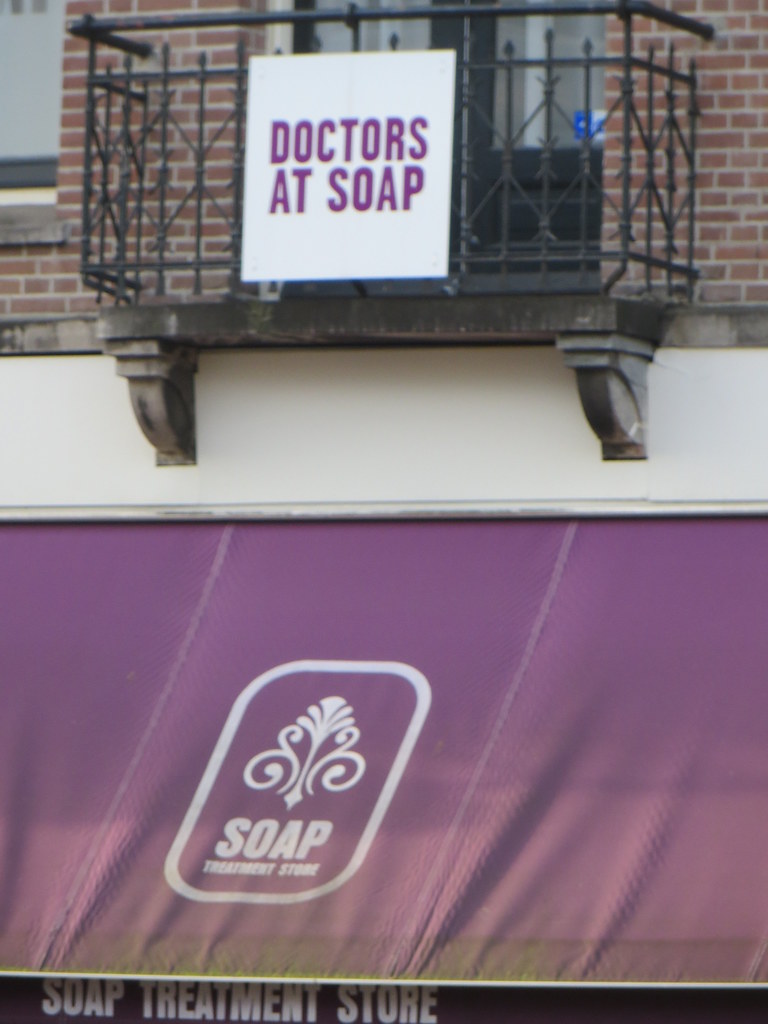
And I can't help thinking that even the most down-to-earth and unpretentious Dutch customer would expect a bit more from a beauty parlour on a fairly posh street than just the soap treatment:


Monday, 20 January 2014

Search me

No, I haven't the faintest idea why anyone would moor a fully-lit floating four-poster bed in a side canal.

Art, presumably.

Somehow.

Friday, 17 January 2014

In one of the streets near where I'm staying, there's a series of these mosaics replacing regular paving stones.

Some in the series are ordinary paving stones themselves, just of a different colour, but there's a definite regular sequence.

So, some guerilla paving artistry, or what?

Well, round the corner there are one or two more prosaic inserts in the paving: so perhaps these are, after all, no more than markers for the connection point between the house drains and the main sewers.

Tuesday, 14 January 2014

In London we have urban foxes....

in Amsterdam, they have urban herons.

Sunday, 27 January 2013

Over the years, street organs seemed to have become less and less in evidence in Amsterdam. Bearing in mind what I'm guessing must be quite a cost in getting and maintaining one, it can't be easy to make much of a living from them. But this weekend, I not only saw one in one of the main shopping streets in Amsterdam, but also in the middle of some fairly heavy snow in Utrecht: maybe the Saturday shopping crowds brought them out.

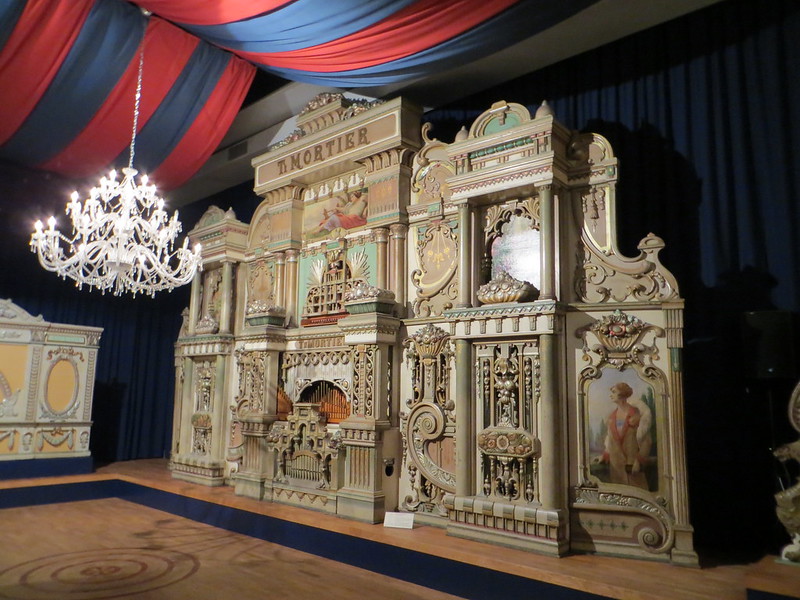
In Utrecht, too, you can surfeit yourself at Museum Speelklok with all kinds of draaiorgels, circus organs, hurdy-gurdies, pianolas, orchestrions, polyphons, musical boxes, some monsters built for dance halls, and some strange mechanical musical instruments (I once saw a machine here that played four violins).

Visitors have the chance to wander around some of the many different examples, but the main interest is the tour of selected machines (though this does include plenty of chances for little ones, and one lucky grown-up, to turn a handle). There's even a bit of singsong, as was once traditional, though at least one of the old songsheets on display suggests something rather racier than you might expect.

Saturday, 26 January 2013

Cold enough

Walking up to a tram stop, I noticed a group of people giving an unremarkable stretch of canal more attention than you'd expect at that time on a Saturday morning - and this was why:

Saturday, 4 February 2012

A weekend in Amsterdam (5)

Some last incidental details that caught my eye:

It pays to look up: as Amsterdammers of the Golden Age found it more tax-efficient to build up rather than sideways, the tops of their houses repay study, not just for the hooks on the gables to hoist up goods and furniture (I once spent a quarter-hour or so engrossed in watching a committee get a fridge up to an attic), but also for some "statement" gable decorations. Is that, I wonder, why even a low-rise modern suburban house may have a decorative figure attached almost to the eaves rather than nearer eye-level?

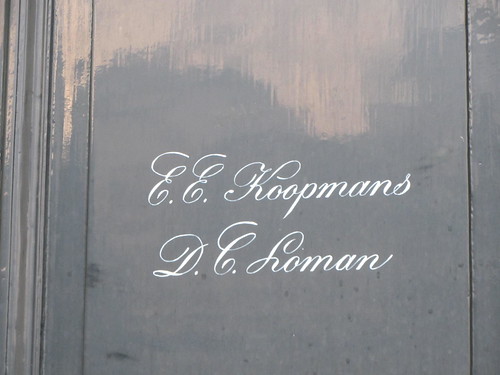
But it also pays to look nearer ground level, at the front doors. Even security can be decorative, in a restrained sort of way - so a grille includes the figure of an inquisitive doorkeeper, and a spy-hole has its own little lace curtain. And, much more impressive than any nameplate or little bit of paper next to the bell is the custom of having the residents' names beautifully signwritten on the front door - a sign of commitment to stay. I seem to remember seeing more of these in the past - perhaps it's a dying skill or it's too expensive now, or perhaps people move around more.

And here are some other impressions in movement and sound: