Heron Island, Great Barrier Reef, Australia
Showing posts with label Austria. Show all posts

Sunday, 25 August 2019

What I did on my holidays (I)

Perhaps, after all, there's something to be said for the usual annual round, in this case, trips to photogenic places I've been to before.

First,  back to Austria for some walking down in the same picturesque mountain valley as for some years past.

Hard to resist the temptation to take yet more photos of the same dramatic waterfall (enlarge this and scroll down to see some tiny humans for scale) and cataracts.

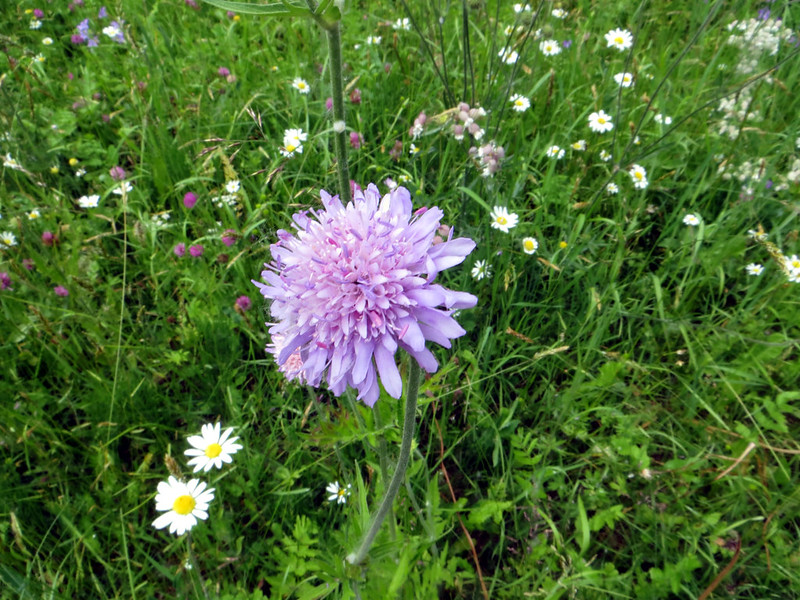
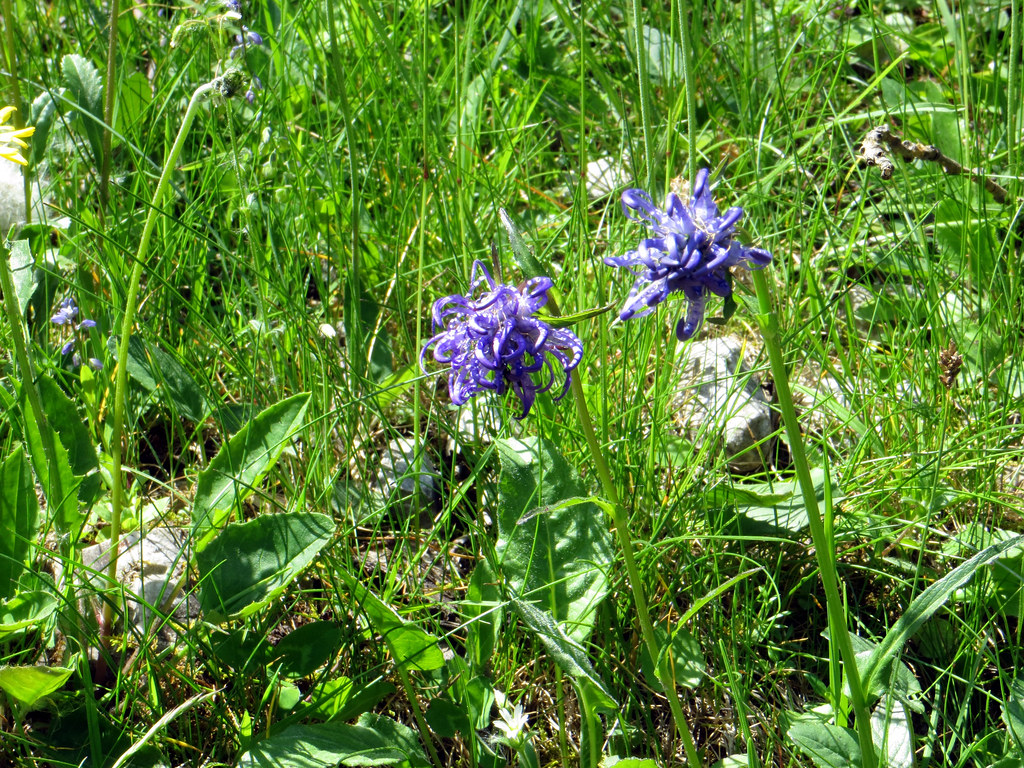
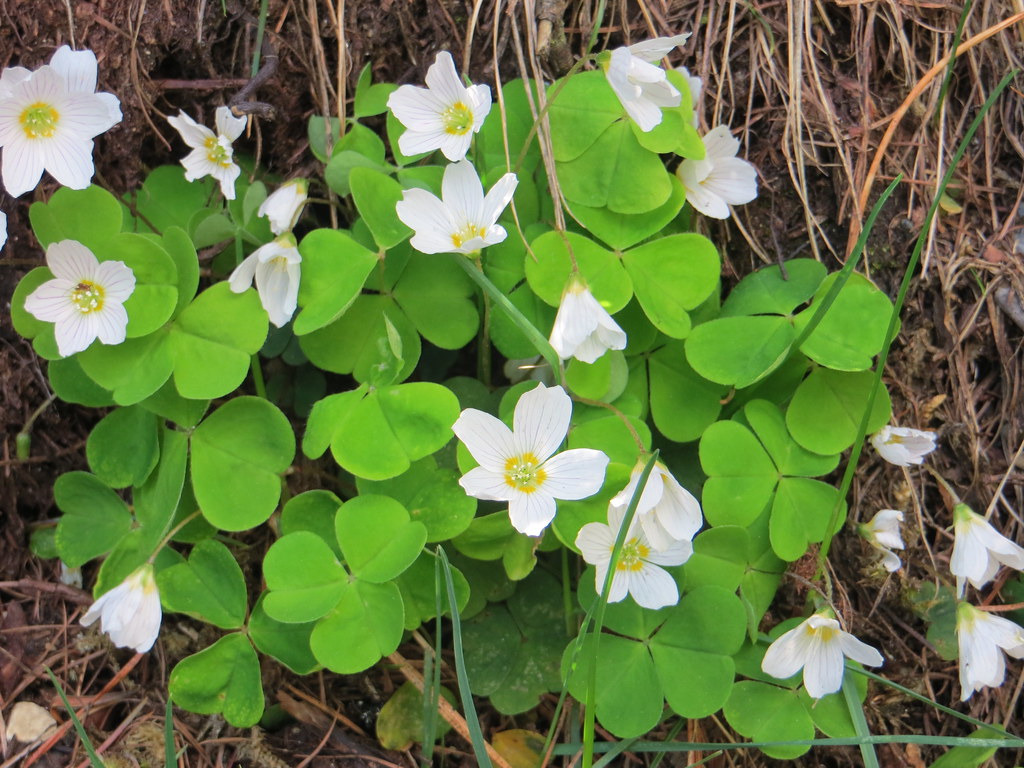
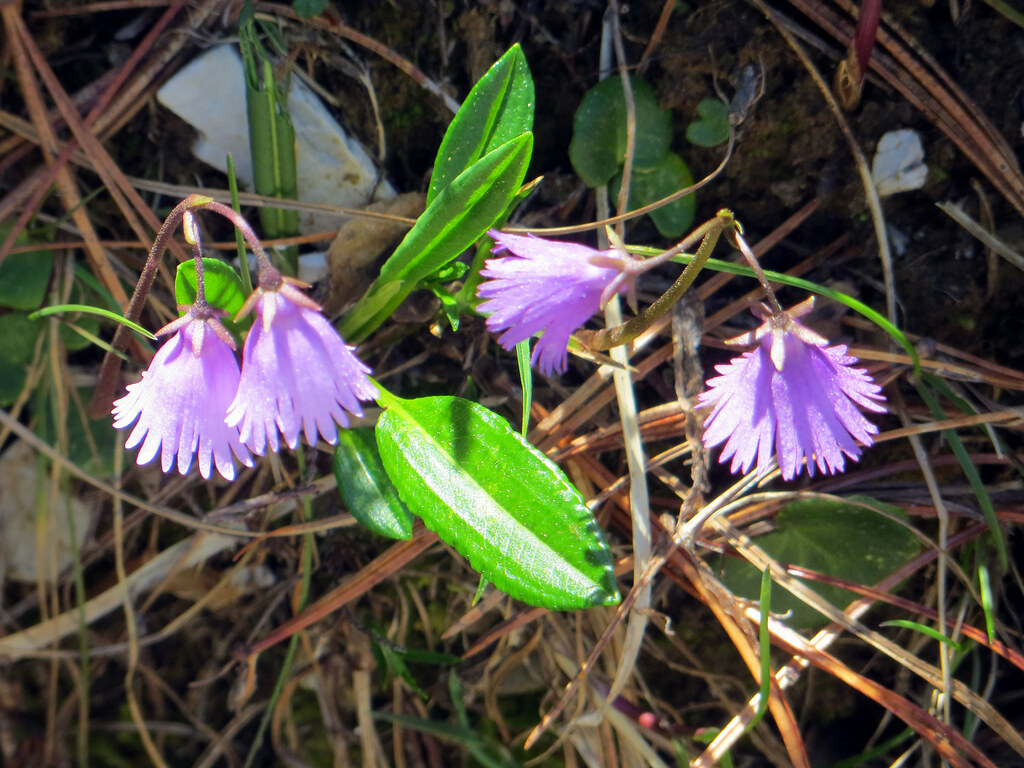
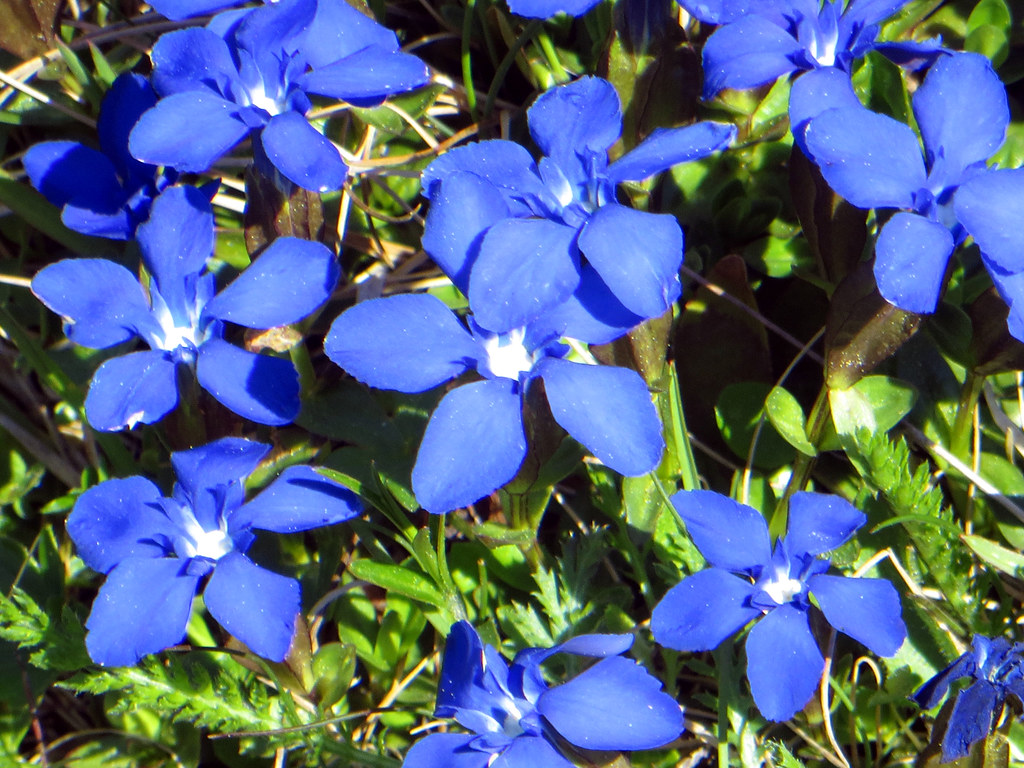
Easier to resist the temptation to snap at every last wild flower (quite possibly exactly the same plants as in previous years),

However, there was something new in some surprisingly un-flighty butterfles who for once stayed posed (heat? or still air?) - and not forgetting an Alpine traffic jam:


Then another brief home exchange in Paris. where the first thing to see on emerging from the usual everyday metro station was this group of inflatable polar bears taking advantage of the hot air from the trains below, and flapping frantically in the breeze.

It appears there's a regular artist at work here, aiming to remind us all of global warming. But his work was purely temporary and vanished within a couple of days (I don't know if the bears simply took flight).

Equally eye-catching was this enthusiastic gardener's full use of a tiny balcony overlooking (what else?) the Promenade Plantée.

And then, in the Tuileries gardens, there was this:


Wednesday, 29 June 2016

So in this brave new world (or strange new limbo), where those who won don't appear to be quite sure whether they really wanted whatever it is they have won, if they could only decide what it is, and those who lost don't know what to do next, what certainties are there?

Death and taxes, of course, according to Benjamin Franklin (or Daniel Defoe). To which, as after every other trip abroad, I have to add, as neither of them did (but that's eighteenth-century patriarchy for you)..... laundry.

And showing one's holiday snaps (even if they are curiously similar to every other year's):
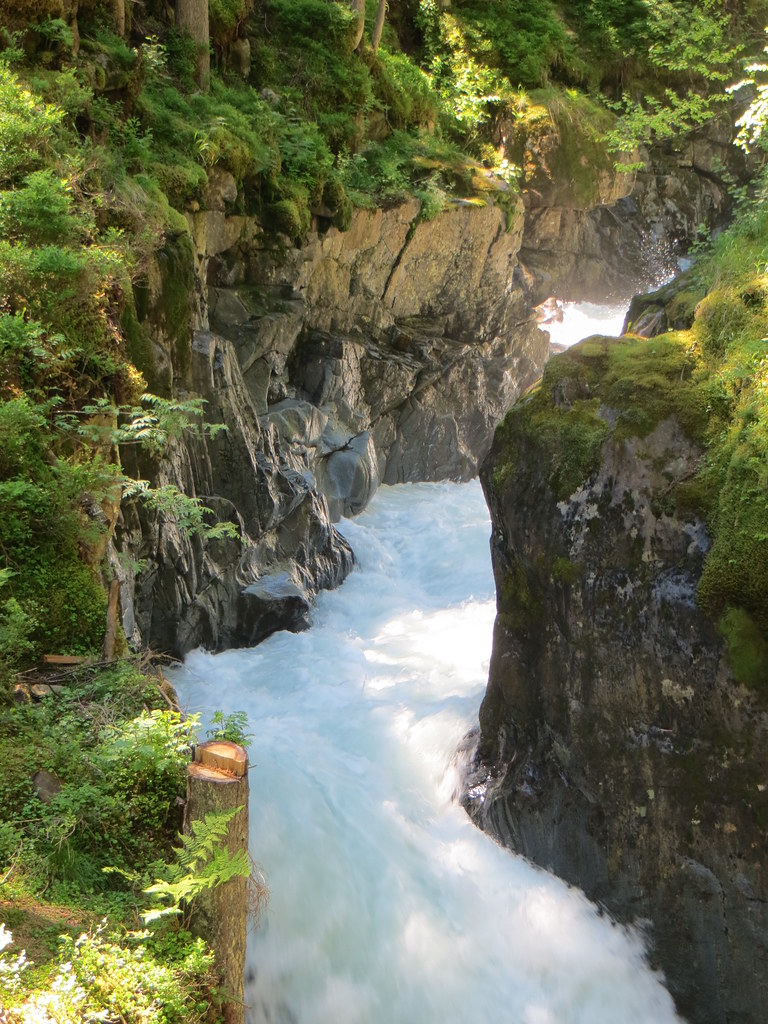
Stubaital - the Rütz-Katarakt
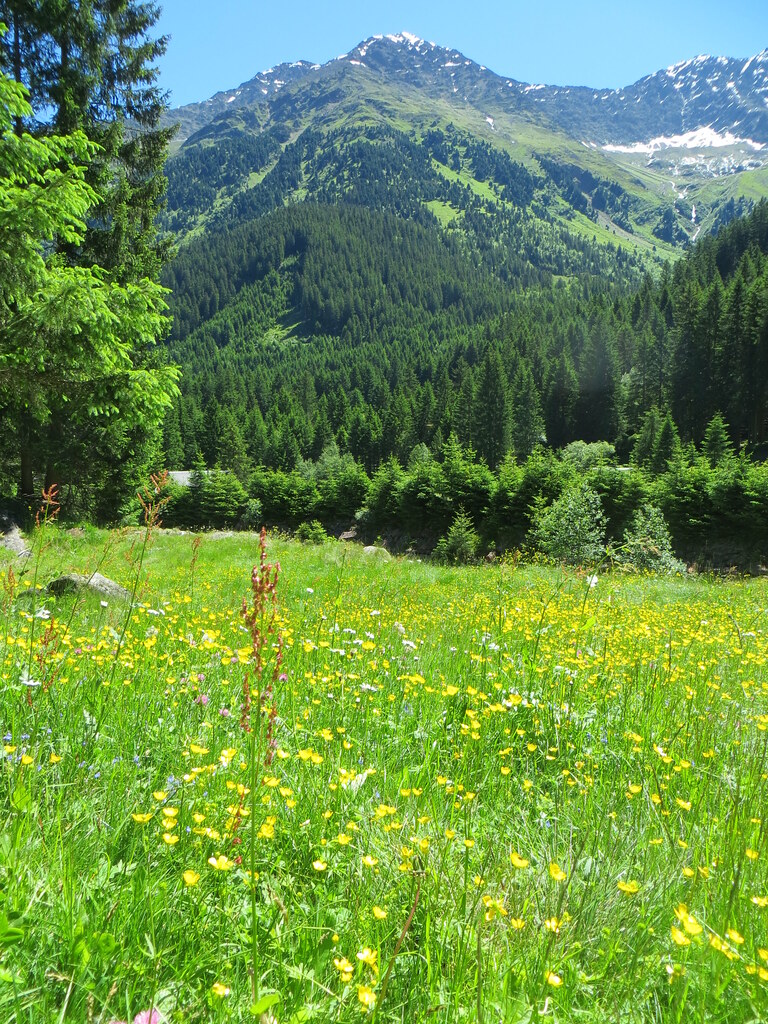
Stubaital- mountain meadow


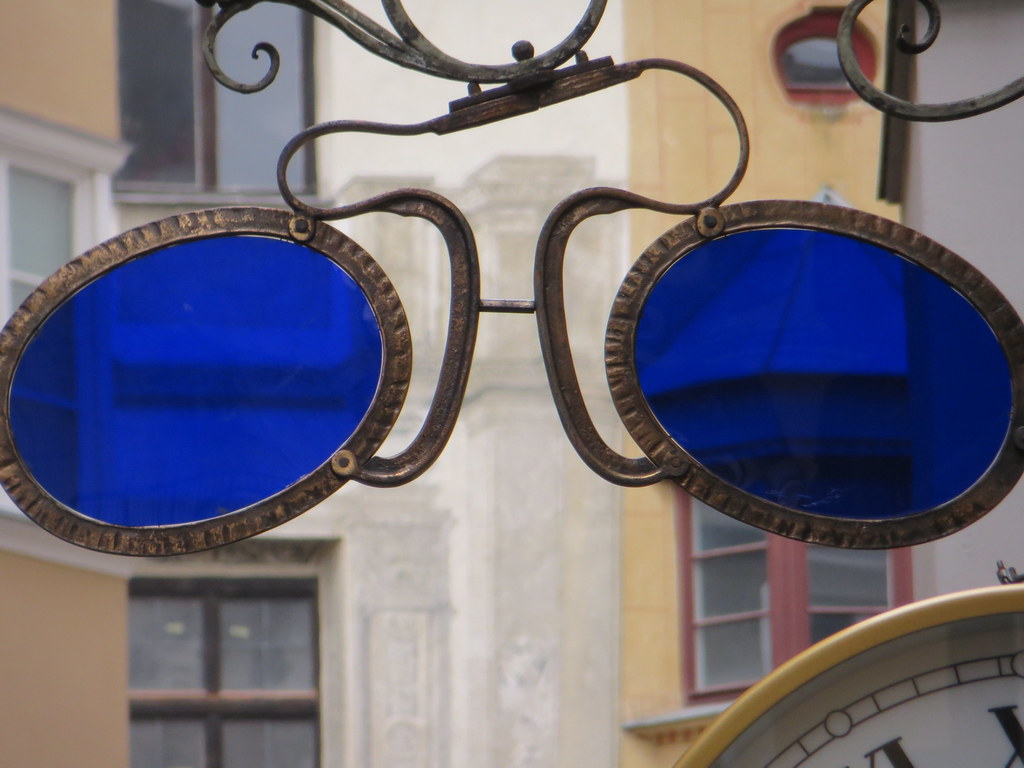
Innsbruck
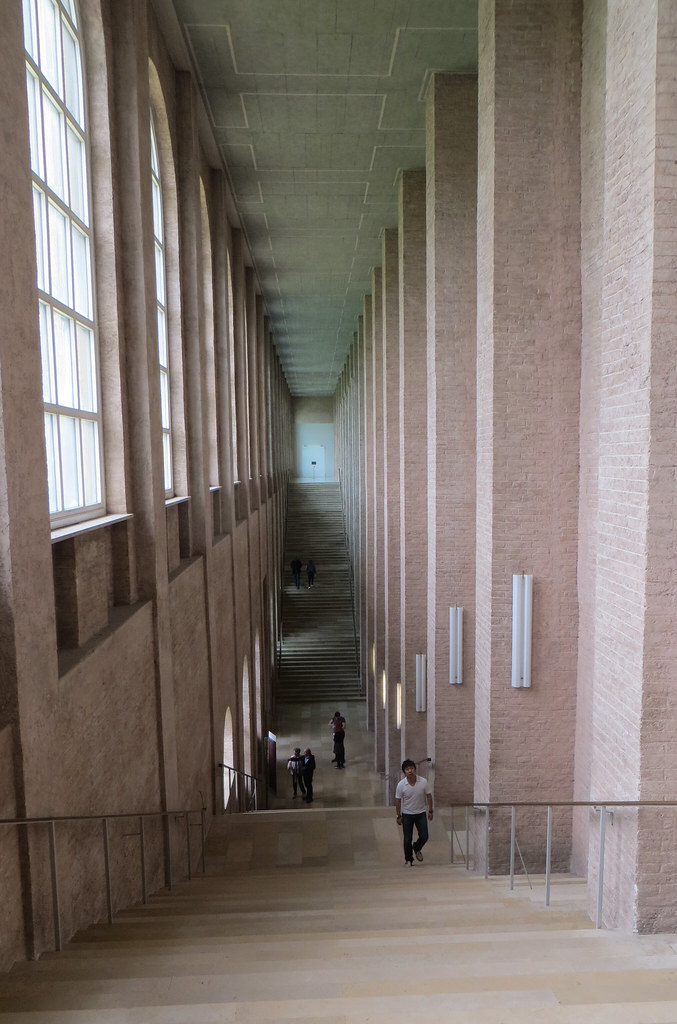
Munich - Alte Pinakothek


Thursday, 23 June 2016

From my point of view...

I am still in Europe (Austria, to be precise).

Monday, 30 June 2014

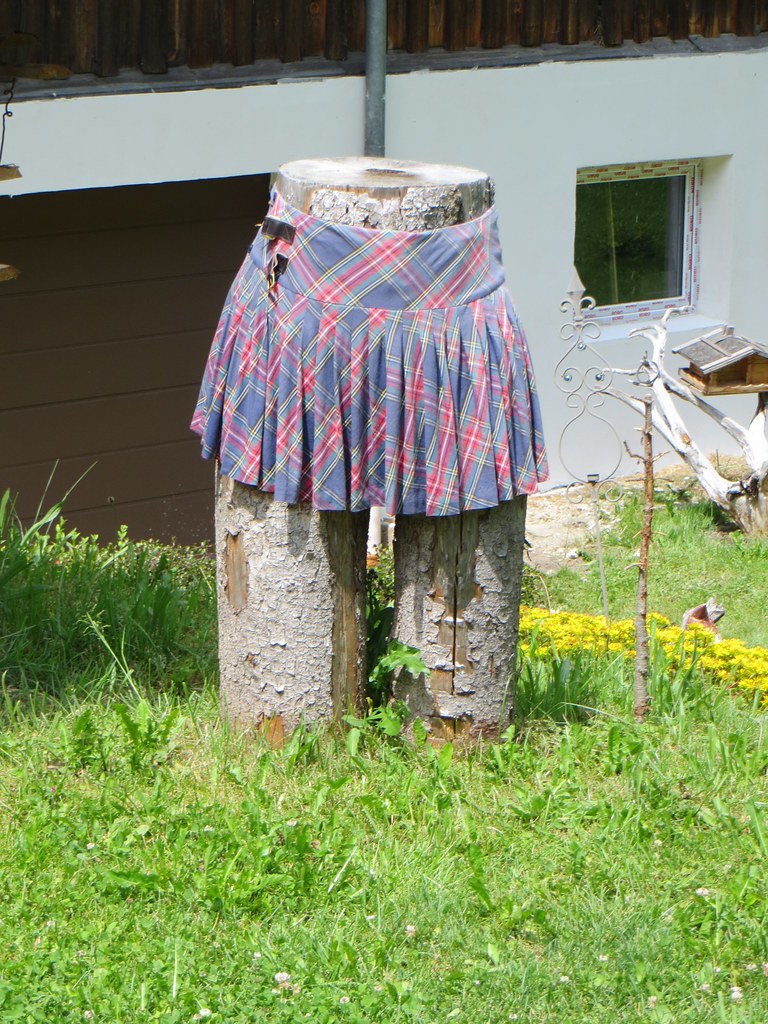
In the land of the kilted pine

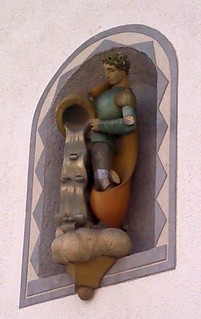
This year's trip to Austria seems to have encouraged a focus on the distinctly odd, like this interesting garden decoration, somewhat out of line with the general conventions of the area (as indeed was the same owner's idea for recycling old kitchen appliances and utensils).

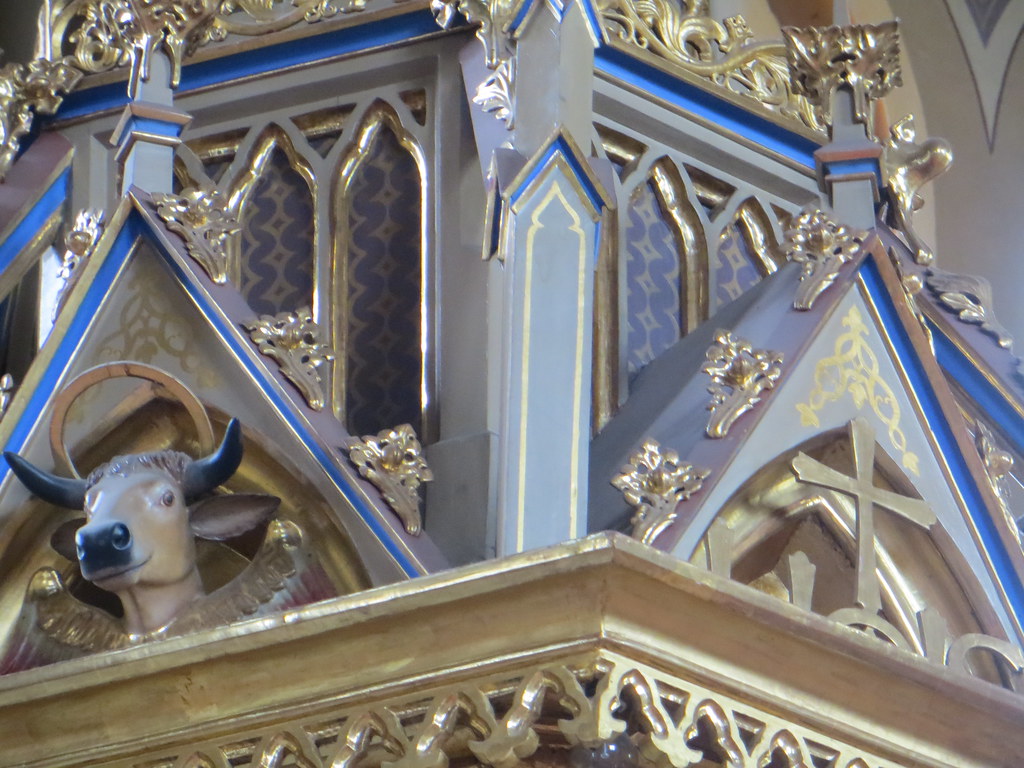
Of course, the scenery remains stunning, the wild flowers beautiful, old buildings picturesque, baroque churches extravagantly fanciful and so on.


But why decorate a church pulpit with a halo-ed cow?

Tuesday, 9 July 2013

Puerile, but I couldn't resist

I wonder how many English-speaking guests get to stay here?

Saturday, 6 July 2013

Gargoyles

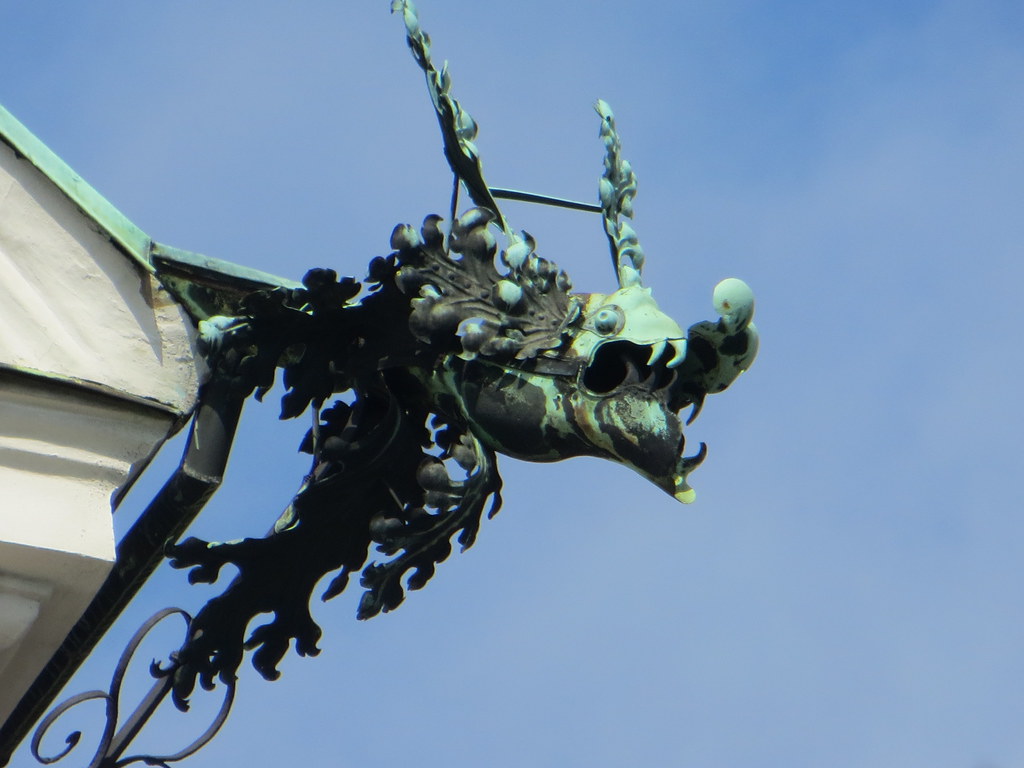
Among many other striking things in the old centre of Innsbruck are some fearsome gargoyles on church towers and, as here, on the Stadtturm.

Wikipedia tells me (so it must be true) that the word "gargoyle" derives from "La Gargouille", a dragon from which a Merovingian saint delivered the city of Rouen, following which its head was attached to the church to ward off evil spirits.

Some of these particular dragons look as though they could scare off just about anything:

Thursday, 4 July 2013

Mountains and flowers

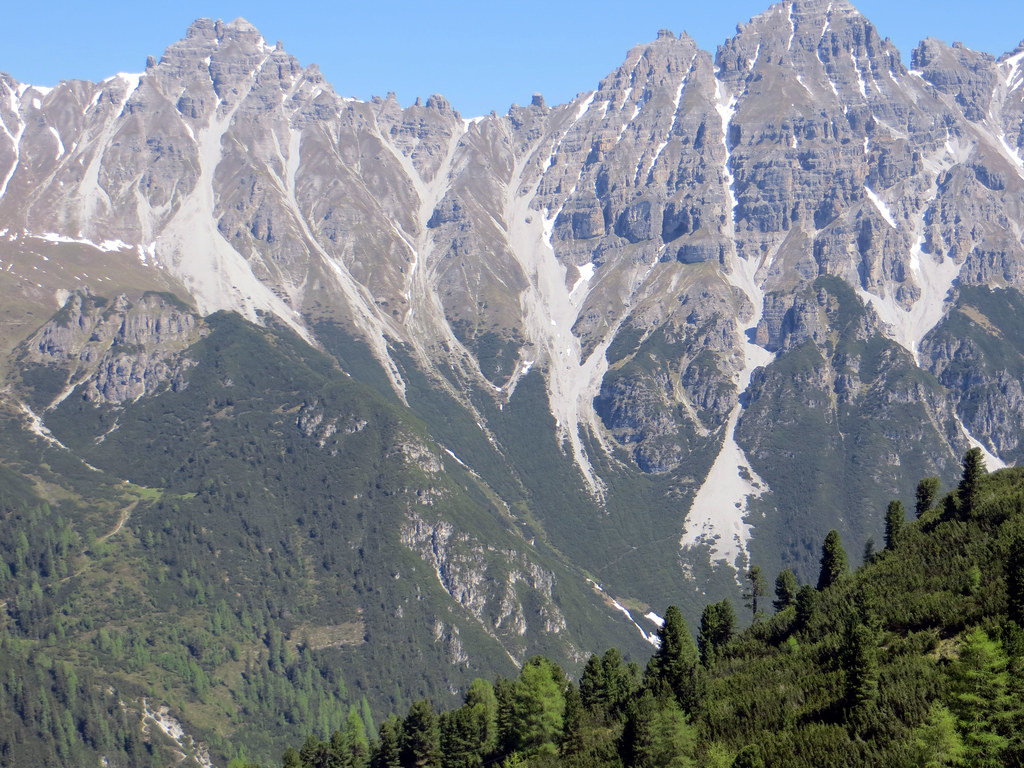
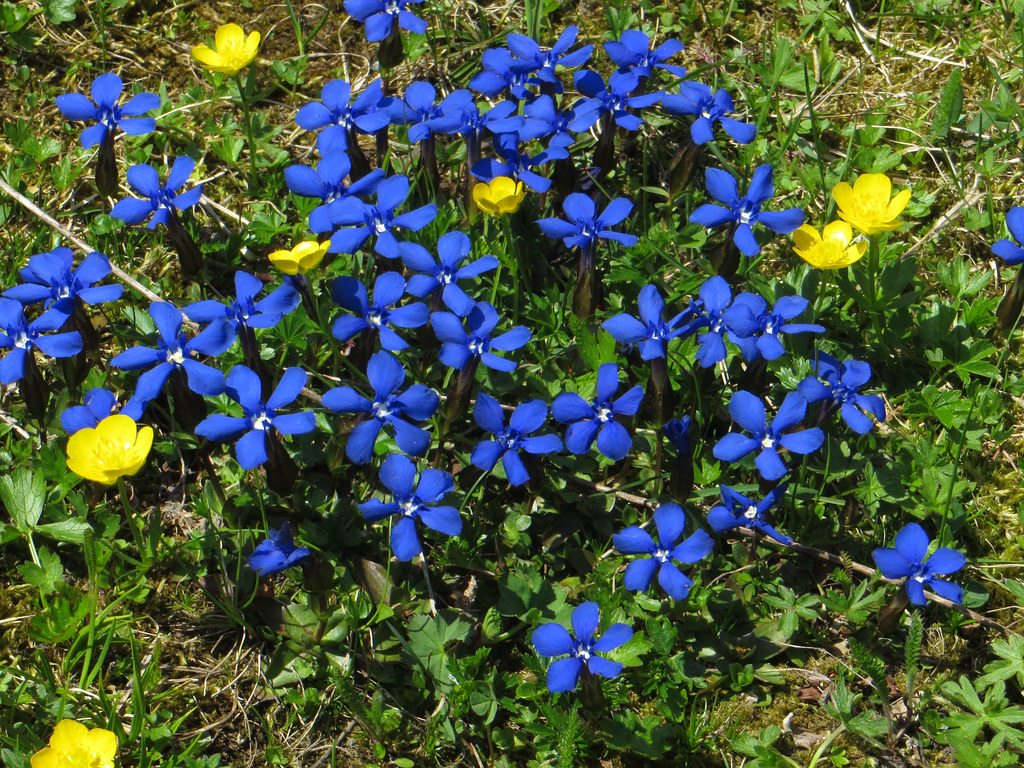
Your eye might be drawn to the distant view, and wonder how on earth they manage to cut and stack hay on what looks like a near vertical surface, but soon your attention shifts to what they're making hay from, and what a quantity of meadow flowers there are.
(Click on a photo for a full-size view)

Further up the mountains, the panoramas become wider, but the flowers contrastingly smaller (even up on the glacier there were a few tiny tufts of pink in sheltered crevices in the exposed rock).
However small they are, though, the intensity of colour draws the eye (and, no doubt, more importantly the pollinating insects).


Friday, 28 June 2013

Painted houses

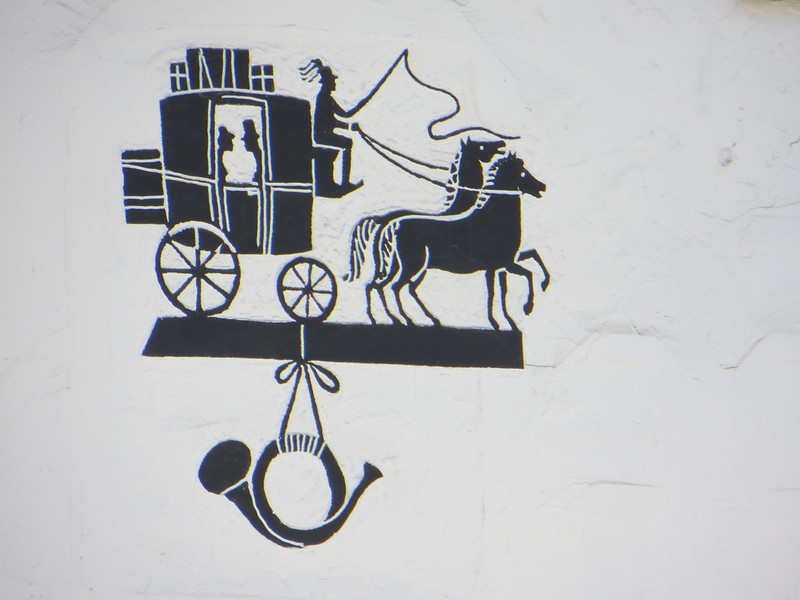
One noticeable custom in the Tirol, and for all I know elsewhere in Austria and southern Germany, is painting pictures on the otherwise plain white plaster or mortar exterior.
It may be just for decoration, or often a painting of the Madonna or saints, sometimes of some allegorical or perhaps local reference, and sometimes to announce the function of the building, as in this modern addition to a village post office.

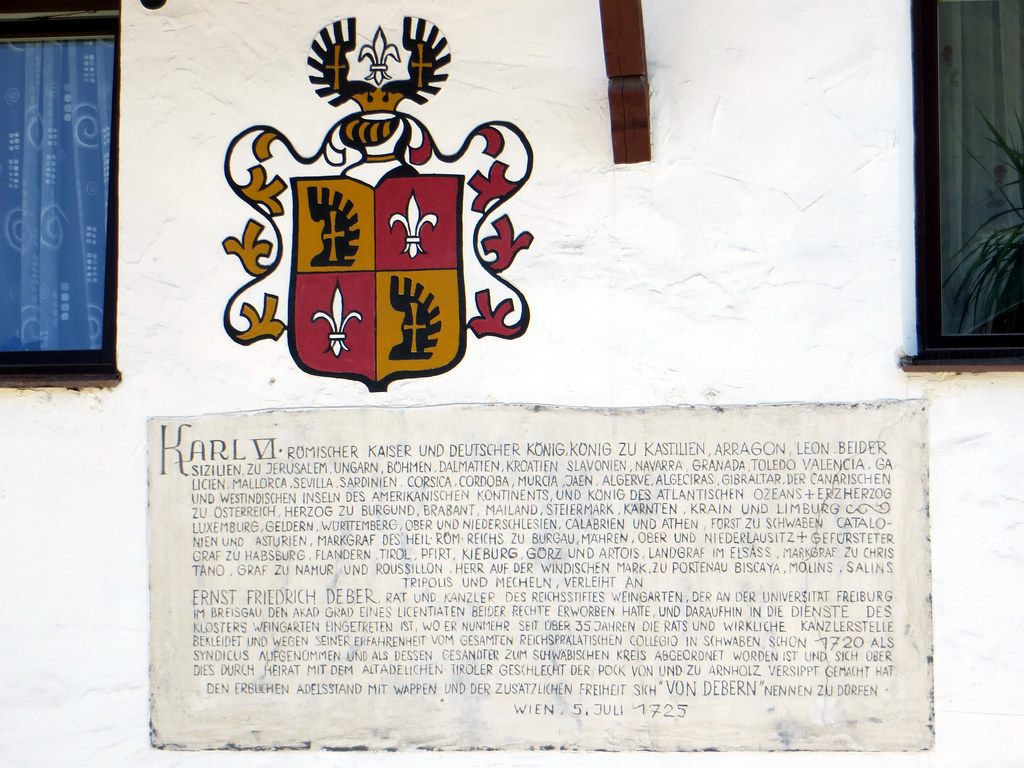
The same wall has a much older, and much less modest announcement. A previous owner clearly wished to show how important he had become, and where that importance was derived from, in an inscription which reads:

Karl VI, Roman Emperor and German King, King in Castile, Aragon, Leon, the Two Sicilies, in Jerusalem, Bohemia, Dalmatia, Croatia, Slavonia, Navarre, Granada, Toledo, Valencia, Galicia, Mallorca, Seville, Sardinia, Corsica, Cordoba, Murcia, Jaen, Algarve, Algeciras, Gibraltar, of the Canaries and West Indian Islands of the American Continent, and King of the Atlantic Ocean; Archduke in Austria, Duke in Burgundy, Brabant, Milan, Styria, Carinthia, Krain and Limburg, Luxembourg, Geldern, Wurttemberg, Upper and Lower Silesia, Calabria and Athens, Prince in Swabia, Catalonia and Asturias, Margrave of the Holy Roman Empire in Burgau, Moravia, Upper and Lower Lausitz, Prince-Count in Habsburg, Flanders, Tirol, Pfirt, Kieburg, Gorz and Artois, Landgrave in Alsace, Margave in Christano, Count in Namur and Roussillon, Lord of the Wendish March, in Portenau, Biscaya, Molins, Salins, Tripolis and Mechelen,

grants to ERNST FRIEDRICH DEBER, Counsellor and Chancellor of the Weingarten Imperial Foundation, who achieved the academic degree of Licentiate in Laws from the University of Freiburg im Breisgau and thereupon entered the service of the Weingarten Monastery, where he has now occupied for 35 years the post of Counsellor and Real Chancellor, and on account of his experience of the entire Imperial Prelatic College in Swabia was accepted as Syndicus in 1720 and as such appointed as representative to the Swabian community and related himself by marriage to the ancient and noble family of Pock von und zu Arnholz,

hereditary rank of nobility with arms and the additional freedom to style himself "VON DEBERN".

Vienna, 5 July 1725.

Wednesday, 26 June 2013

Paragliders

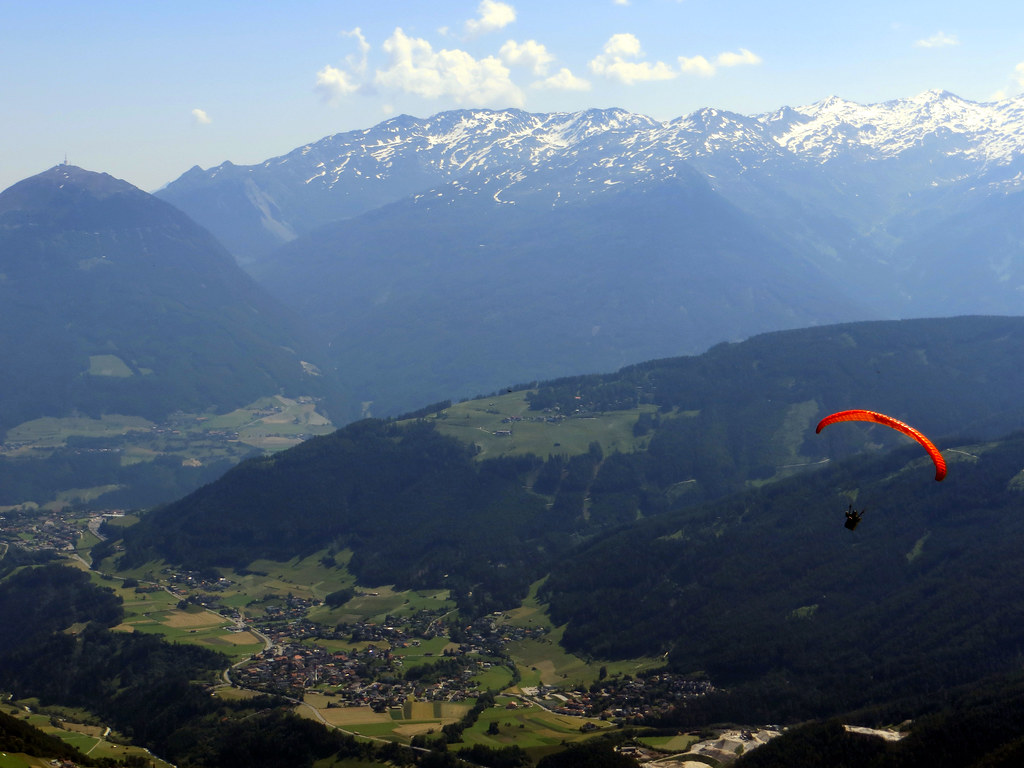
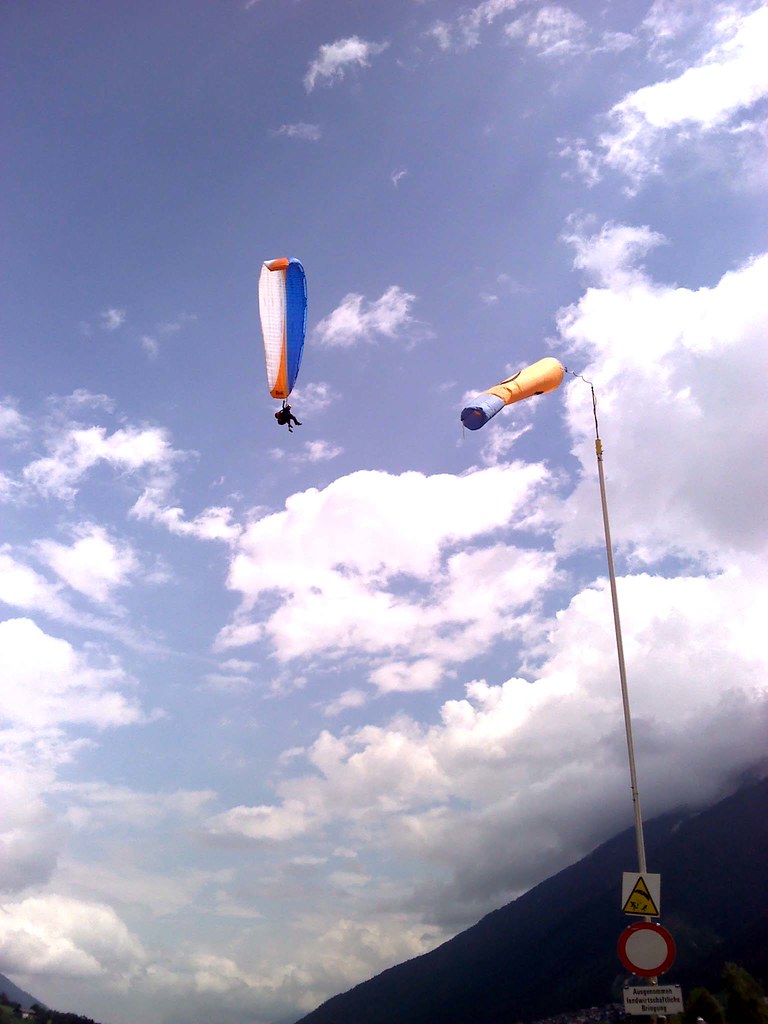
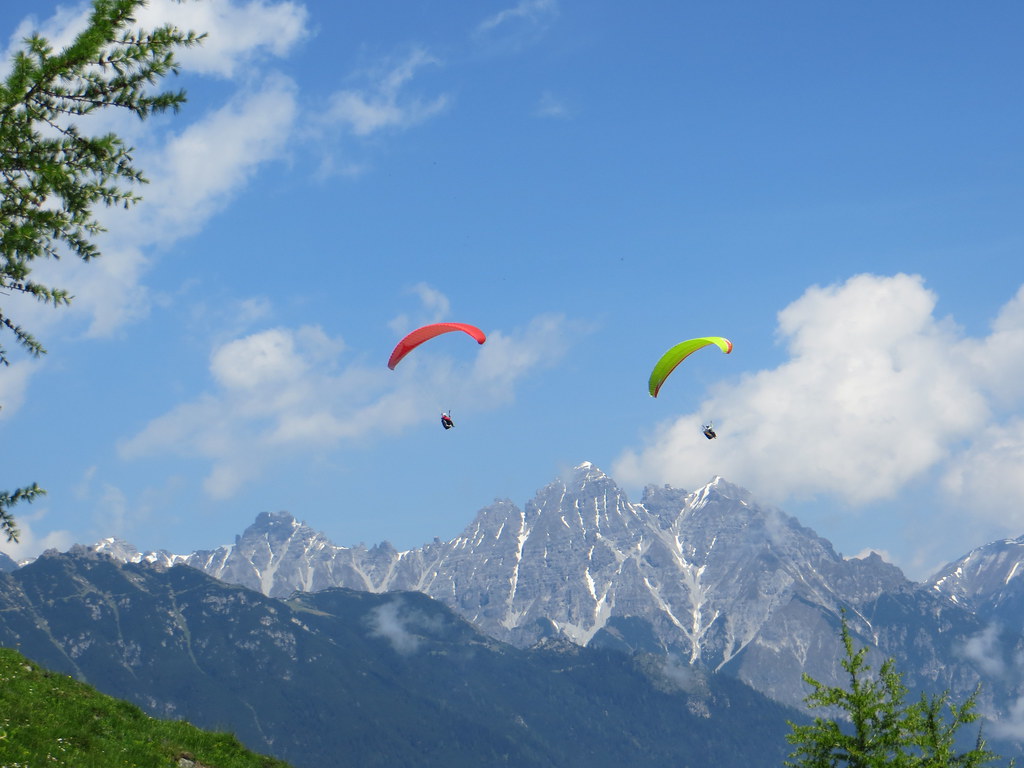
Walking in mountains develops a split focus in attention, switching between the grand panoramas and detail of tiny Alpine flowers (of which more later). On thing you can't fail to notice in a grand panorama is people flinging themselves off the top of a steep slope, relying on their parachute to glide around and gently (one hopes) down to the valley floor.

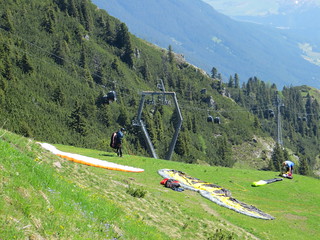
Not something I'd care to do, but you have to admire the skill and grace of those who do. Not that there's much sign of that at first, with the parachutes laid out on the ground and looking like plastic litter.

Then there's the checking of the cables to make sure there are no tangles, consultations about the wind and contact with some distant control point before the take-off is cleared.
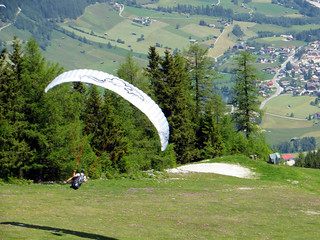
Eventually, a helter-skelter run sees the parachute pick up air, and then lift the pilot off the ground as the slope falls away beneath.

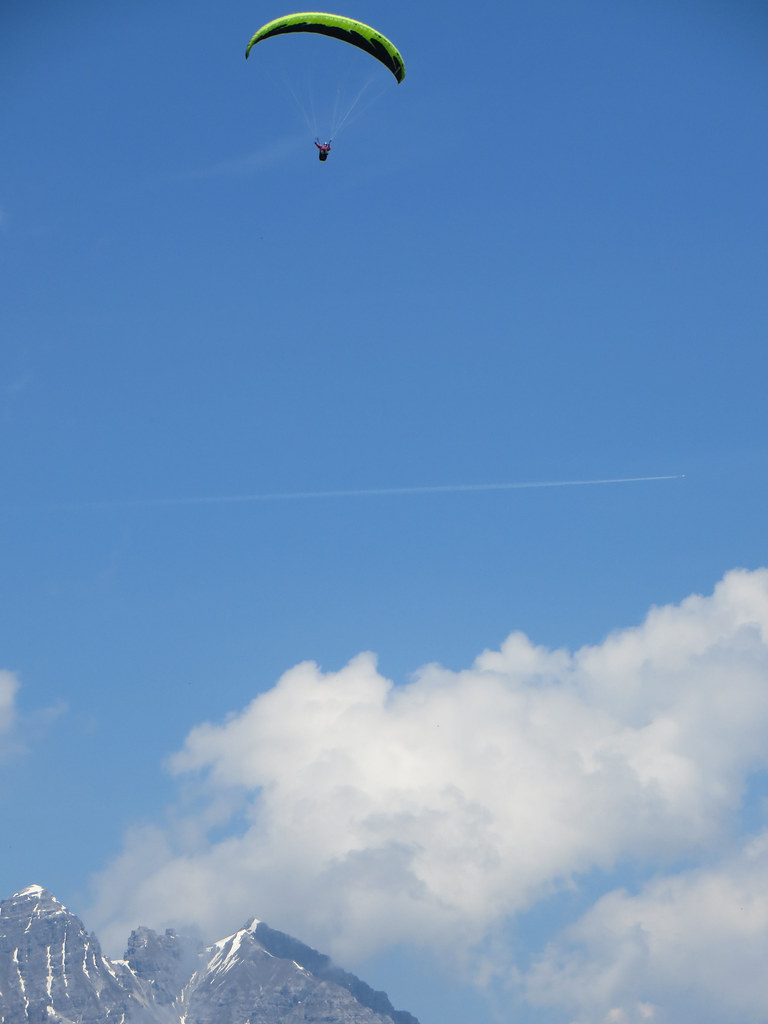
Then, they're flying way out over the valley - and in the heat that settled over Stubaital, like so much of central Europe, last week, the thermals were carrying the paragliders very high indeed. As you walk through the meadows and woods, the sun may suddenly be replaced by a shadow as one passes silently over; or you may suddenly spot one gliding through a grand vista. It's a magnificent sight - but I still wouldn't care to do it myself.

Sunday, 22 July 2012

Feeling that you've arrived in a stage set may be a common feeling for the tourist, in the midst of images familiar from films and books; Austria manages to achieve the effect in less expected surroundings.

Village houses in the Tirol often have painted decorations as a presumably cheaper way of adding some more upmarket period detailing. Even the new community centre in one village (school, meeting hall and fire station all in one) has a mediaeval look with its complete painted window:

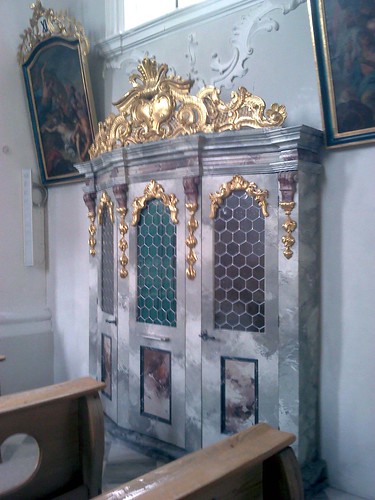
The churches were no less theatrical. The Wilten Basilica in Innsbruck has additional balcony fronts that seem to serve no other purpose than to display yet more gilded plaster moulding alongside what is already on the pulpit and organ gallery, matched for lightness, brightness, size, and decoration by some of the ordinary village churches in the Stubaital, where the galleries could as well be in a big city theatre - and even the confessional might be a private box at the opera:


Friday, 20 July 2012

Adventures in machine translation

Every morning, our hotel in the Stubaital would give us an overview of the day's weather and some suggestions for the day's activities. One day the English version on our breakfast table proposed a walk to look at the monastery bodice - an intriguing prospect, till the German teachers of English on the neighbouring table pointed out that the German for "bodice" was more or less the same as the name of a village further down the valley. We also had suggestions for "fastidious mountain routes", and one of the mountain lodges in the area (the Oberrisshütte, if you're interested) was translated (semantically if not semiologically correctly) as "the upper crack shack".

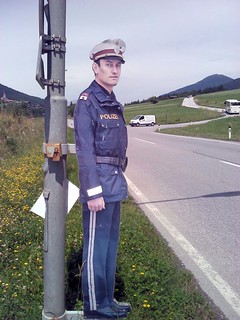
Machine translation still has a long way to go (as any fule kno). Likewise, perhaps, the idea that a suitable deterrent for drivers tempted to speed would be a simple life-size photograph of a policeman, safely padlocked to a lamp-post.

Thursday, 19 July 2012

Another day, another gondola

Not bad for a view from one's hotel room, is it? This was what greeted me on arrival in the Tirol: a view all the way up the Stubaital to the glacier up at 3000m, the steep slopes showing how the glacier carved the valley out millennia ago.

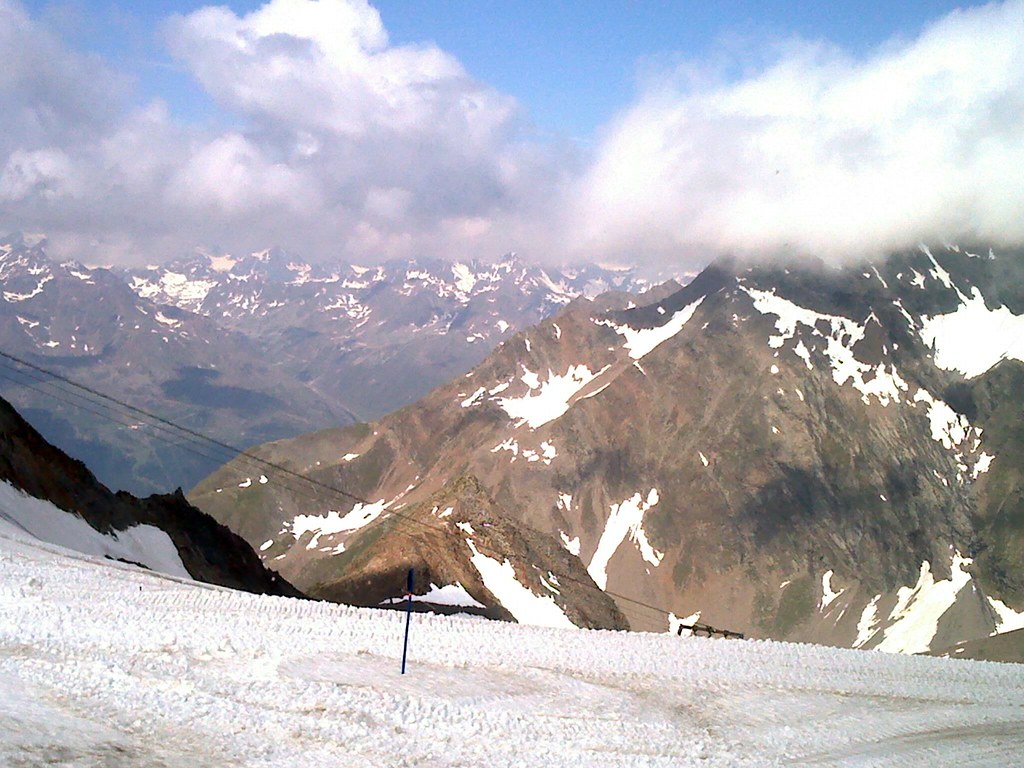
Nowadays one might even wonder whether there'll be a glacier there for much longer. On the tops, the snow has melted far further back than in previous summers, leaving large parts of the ice exposed to the sun; summer ski-ing has stopped, and large areas of snow are covered by canvas. Where snow and ice have melted, all that is left is a daunting, even depressing, moonscape of rocks and scree; but on the walk down through what feels like a succession of seasons or climate zones, into increasing greenery, spotting gentians and waiting for sheep to pose artistically (some hopes), the views are stunning:

Walk down, you'll notice I said, following a ride up in the cable gondola. There are several in the valley, accessing different starting points for winter ski-runs and summer walking (and tobogganing and paragliding for the intrepid).
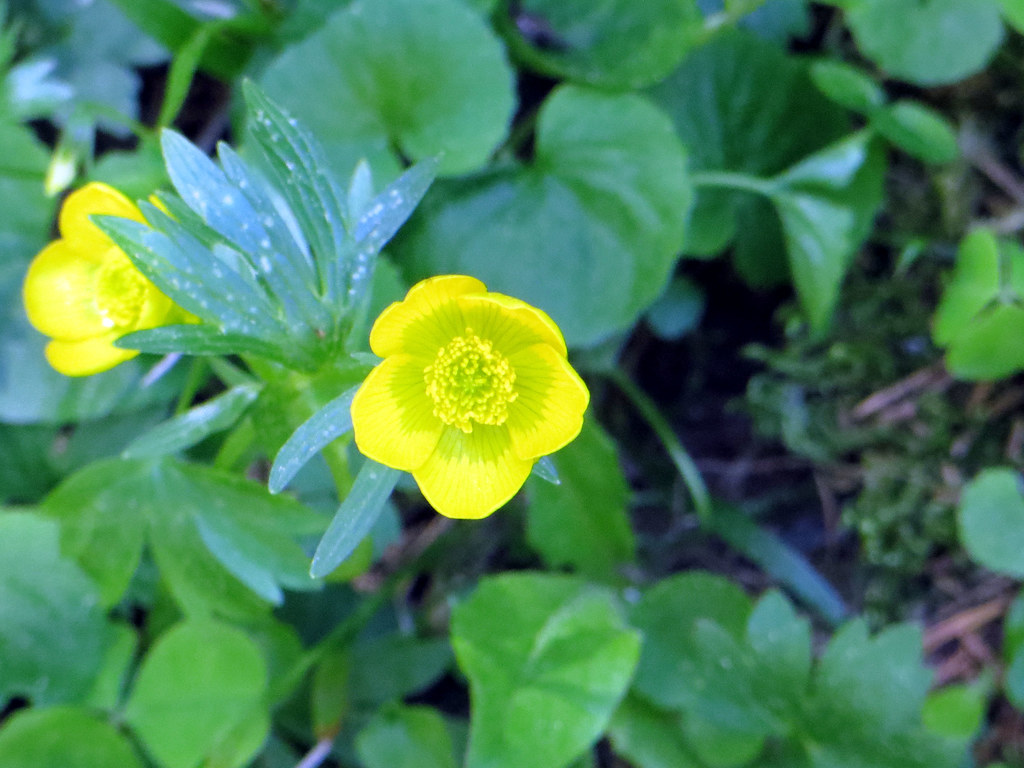
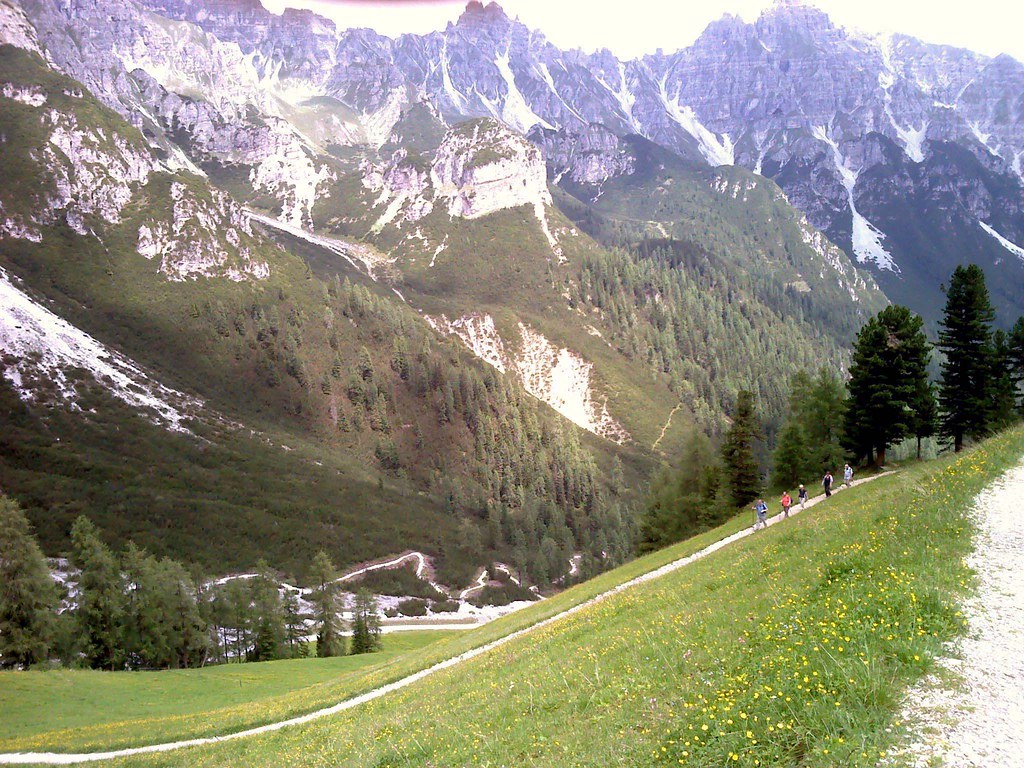
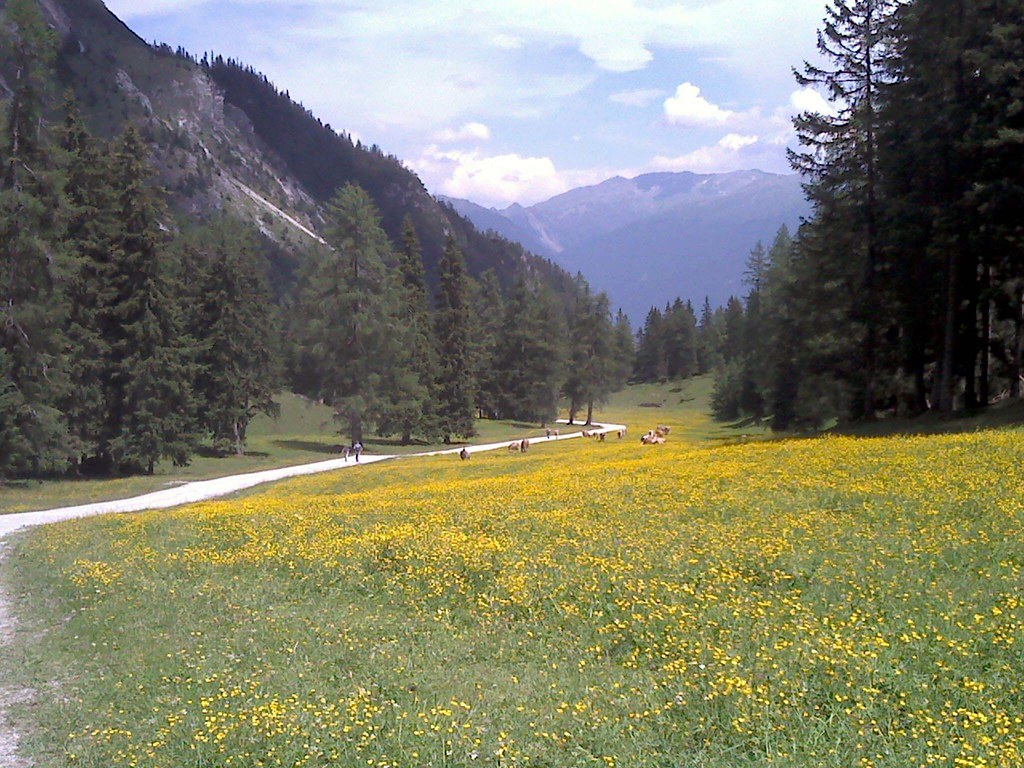
Down the valley a little way, another route starts with equally stunning views inside a bowl of jagged peaks, but from somewhat lower, so that from the start a smooth path leads down through wooded slopes, and alpine meadows where the cattle have plenty of buttercups to graze on, to an "alm" (presumably meaning a refuge, but in practice usually a comfortable lodge-cum-restaurant) with a dog snoozing in the afternoon heat.

For a really dramatic view, one (but not me) could see what the paragliders see - as from this launch ramp at one of the top stations.

Personally, I prefer a more sedate way down to the valley floor. I'm happy to keep my feet safely on the ground while I admire their skill as they circle in to land.


Sunday, 15 July 2012

A village band festival

You don't realise that Austria isn't that small a country, at least from side to side, until you travel the five hours by train from Vienna, at the eastern end, with Slovakia on its doorstep, to Innsbruck and on into the Tirol at its western end, with Germany, Switzerland and Italy within day-trip distance. Here in the mountains, villages even in valleys now barely half an hour by bus or car from Innsbruck were relatively remote until there was investment, not so long ago, in roads and transport to entice winter sports enthusiasts, summer walkers, mountain bikers and the like.

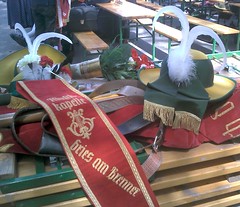
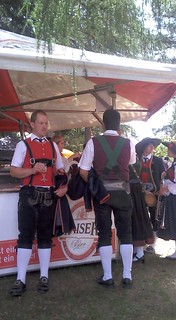
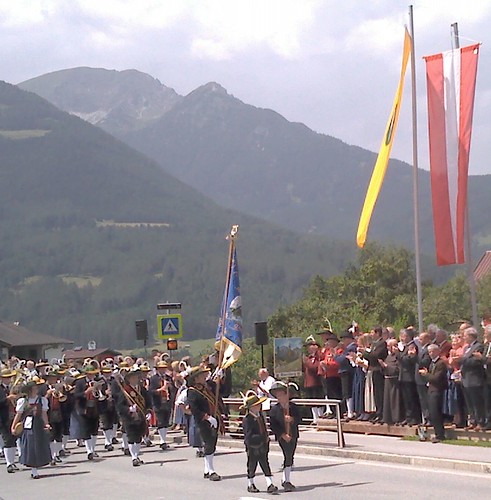
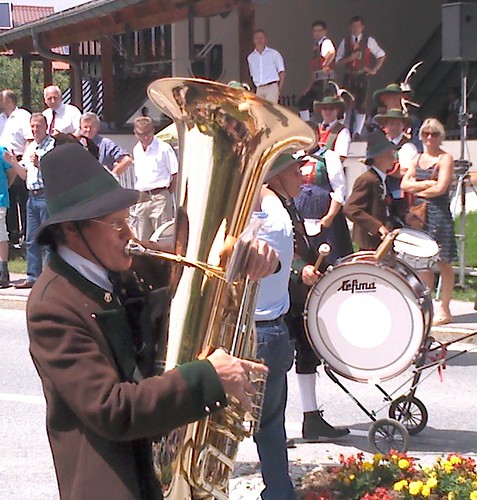
Here the traditional doesn't mean the grandeur of the Habsburg palaces but home-grown entertainments like the village band; and on our first day in the Stubaital we went to a neighbouring village to see the parade of bands from villages round about. If I understood the parade announcer correctly, some of the bands date back to the late eighteenth century, and even villages with quite a small resident population can get together 40 or 60 people, of all ages, to join the band.
This being another in a series of very hot days, much of the heavier traditional uniform was safely parked while everyone fortified themselves in the beer and sausage tents, before eventually streaming off to the mustering point for the start of the parade, while the guests of honour mounted the temporary podium by the road.

The formalities required the recital of quite a long list of people of consequence in regional and local government, and in the organisations promoting and supporting the bands, before the parade itself started. Apparently the federal Minister of Education is a member of one of the bands, but was away at some international conference. Fourteen bands in all paraded past, each preceded, Olympic-style, by a banner announcing who they were (some of them appeared to be competing for a "winsomest tots" award), and the ceremonial schnapps-bearers. Some stopped in front of the dignitaries to perform various marching manoeuvres; and eventually the guests of honour were lined up behind the last band to march off in their turn, back to the beer tent. Here there were more speeches, cheerfully ignored in the convivial re-fortification and general conversational catching-up, before bands gave a sit-down concert in the village pavilion: the only one we stopped to hear surprised me by playing some British music (and very well too).