Heron Island, Great Barrier Reef, Australia

Tuesday, 26 April 2011

A grand day out

By tradition, a sunny Bank Holiday Monday more or less requires Londoners to go to the seaside - and the closest to hand is Brighton.

You can go for the over-the-top orientalist splendour of the Pavilion, or check out the antiques, arty and alternative shops and cafés in the Lanes, the Regency re-construction of the original fishing village
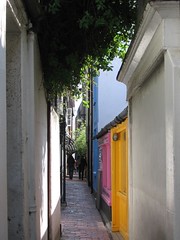
But for most people, Brighton is for fresh air and fun, preferably as vulgar, saucy and sometimes downright raucous as possible

If it' s still a bit early and breezy for the beach to be getting crowded,
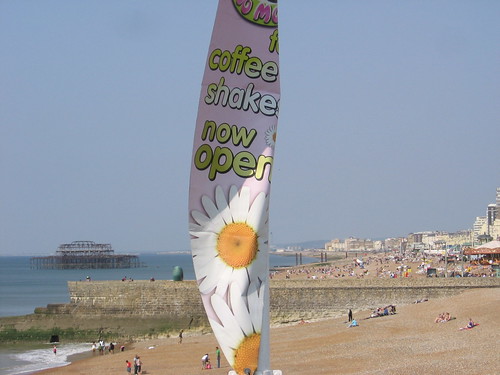
and if strenuous exercise isn't your thing,
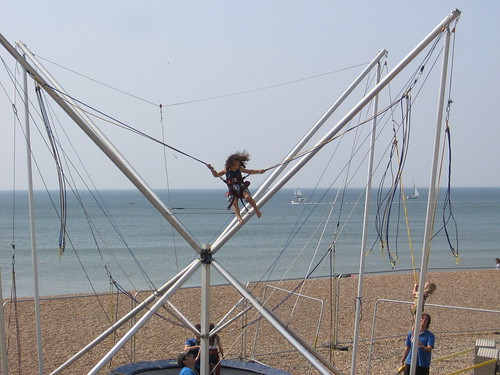
then the pier always offers something.

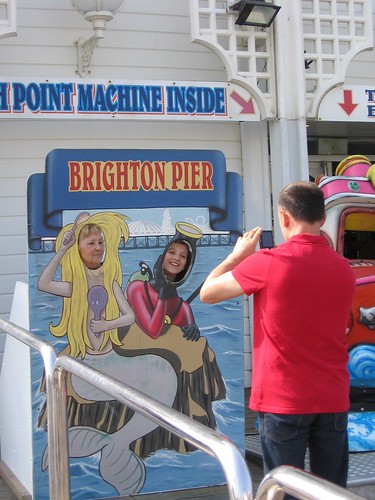
From the simple pleasure of getting yourself photographed in a comical pose or topical situation
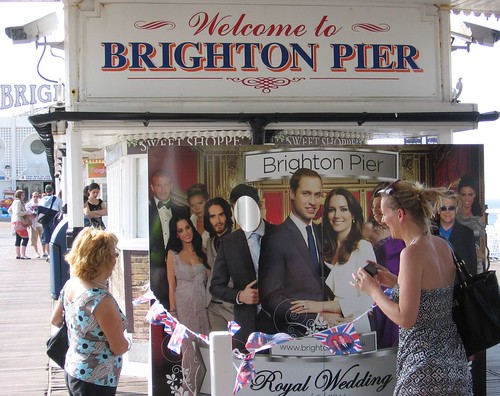
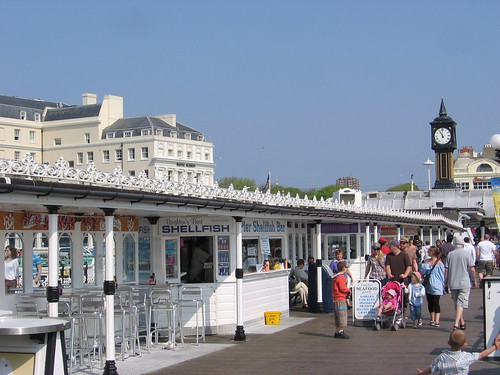

you can stroll along the pier, taking in the views and peering between the decking, which is carefully spaced to let you experience the thrill of seeing the sea beneath your feet without any of the inconveniences of being on a boat.
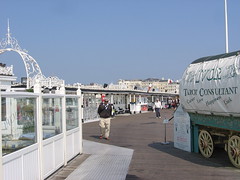
And, of course, among the opportunities to relieve yourself of your money, there are food stalls and a fortune-teller (if you believe the signboard, even the biggest financial firms in London consult the tarot reader, which may explain a lot).
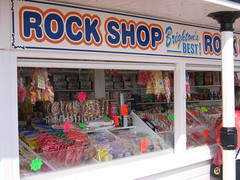
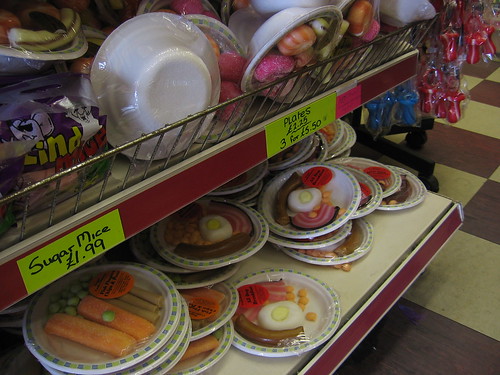
You can't come to the seaside without visiting the rock shop.

Your tooth-threatening souvenirs are available in all shapes and sizes, not just the familiar stick with name of the resort lettered all through, but also versions for your football team or for the recipient:
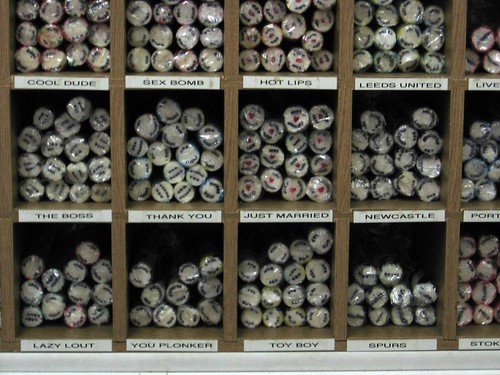
Amaze your loved ones with a novelty meal:
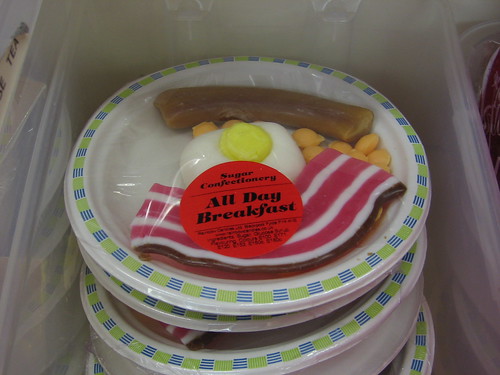

or amuse your more disreputable friends with something saucier:
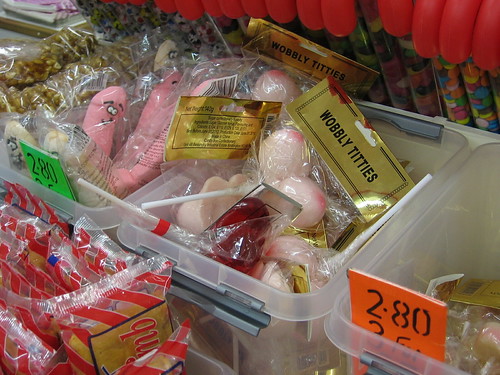

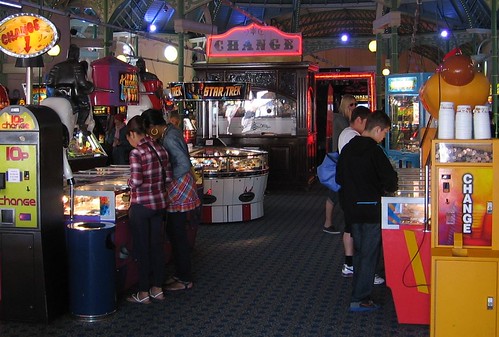
With treats and souvenirs bought, there's still the amusement arcade and its "penny falls" machines, cranes that never pick up the cuddly toy, and shoot 'em up video games:
and right at the end of the pier, the funfair offers all the waltzers, dodgems, coconut shies, racing games, horror shows and thrill rides you could want:
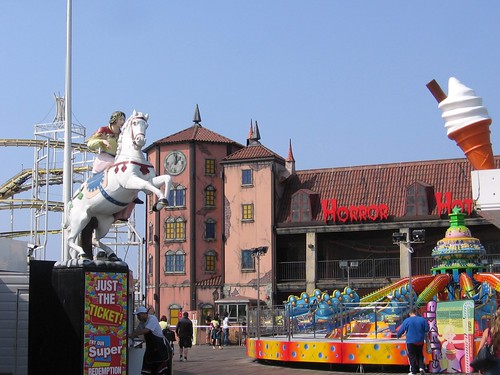
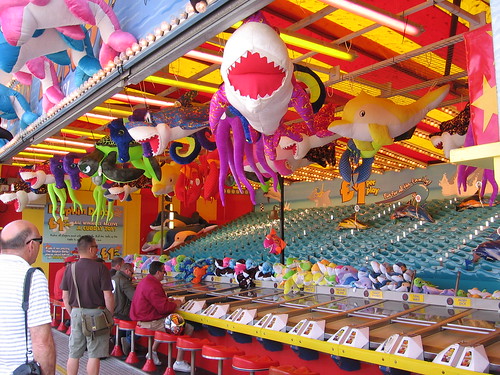
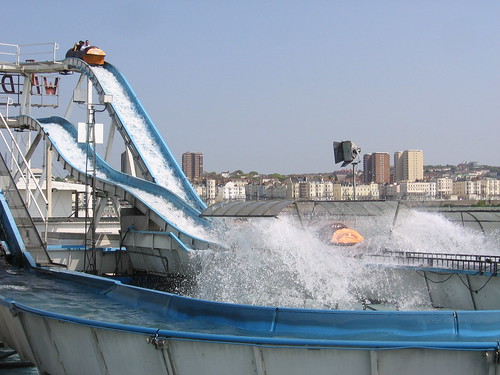


But don't just take my word for it. Here's another view of a day out in Brighton:

Saturday, 23 April 2011

Old friends

This venerable houseplant has just come into flower. It's one of a pair that have been around for decades, and that I brought home from my parents' flat after they died. The other is a Christmas cactus, which produces a winter display of flamboyantly frilly flowers in an improbable neon shade of purple. This one flowers in spring, and, today of all days, deserves to be called an Easter cactus.

According to my equally ancient reference book on houseplants, they've both been called a Schlumbergera, which doesn't sound very attractive. The book implies they're rather sensitive, but they get no special treatment from me, and yet they quietly flower on time, year after year.

Time for a tonic

This retirement lark is rather strange. With all the time in the world to do whatever takes my fancy, somehow it takes more effort to get started. I have got as far as catching up on a few household tasks I'd been putting off, but mostly I've been in holiday mode.

I've read more books in a couple of weeks than in as many months before, but somehow that holiday feel hasn't extended to much getting out and about, despite waking earlier and earlier in the mornings. It's no surprise I've started feeling the impulse to nap in the afternoon as well as slope off early to bed. In the present glorious weather that seems like a terrible waste (as well as a certain recipe for encouraging ever-earlier wakefulness, and so it goes on).

But the season of Big Events is well under way, and not to be ignored. A novelty this year is the South Bank celebration of the 60th anniversary of the Festival of Britain on the site. This in turn marked the anniversary of the Great Exhibition (the first of its kind) in 1851 and was set up as a "tonic for the nation". After ten years of austerity and deprivation, this rundown and war-damaged area of London was to be - in today's parlance - regenerated by a combination of cultural investment and crowd-drawing fun, with exhibitions of the latest technological and industrial developments, arts and design, funfairs, bands and outdoor dancing.

Like its predecessor, it was derided in advance as a waste of money and a vanity project for its promoters, but turned out to be a great success. The celebration of a supposedly reinvigorated and innovative British technology and manufacturing looks a bit hollow from today's perspective, but the area's new identity as an arts and entertainment centre has underlined the Festival's lasting reputation as a kick-start for new thinking, particularly in arts and design.

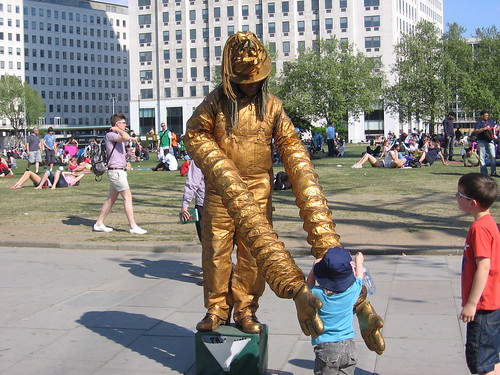
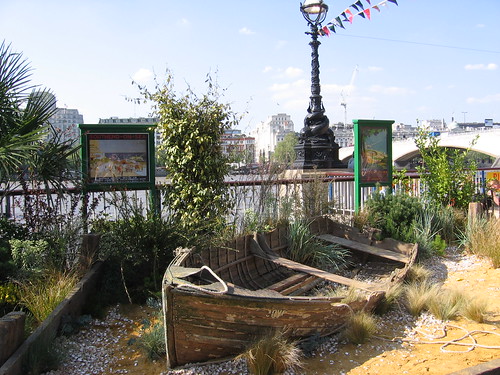
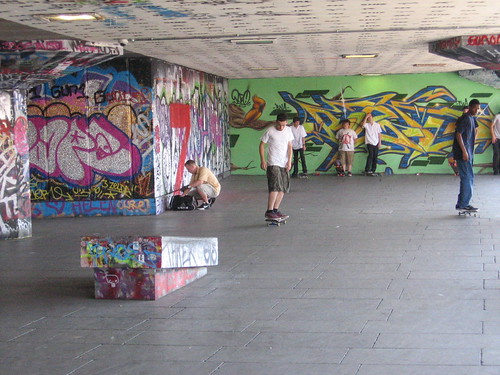
So what are they offering us this year? Well, to add to the living statues, buskers, skateboarders and trick-cyclists, bookstalls, theatre, cinema, galleries and concert halls, and an inflatable temporary theatre for a comedy festival, we have a temporary "seaside". A rather small beach (well, a giant sand-pit really, Paris Plage style), a line of gaily-painted beach huts offering various art works, and a rather over-romantic/nostalgic depiction of Southend-on-Sea, deckchairs on the artificial lawn outside the bookshop, and massive queues building up for the ice-cream stalls.


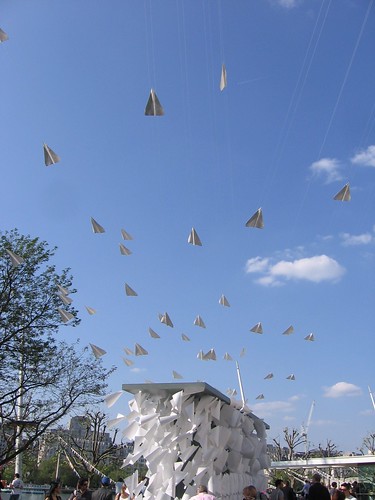
Not all the art displays were fully functional, but one eye-catcher is this display of poems written by refugee groups in London, recalling something similar in the 1951 Festival:

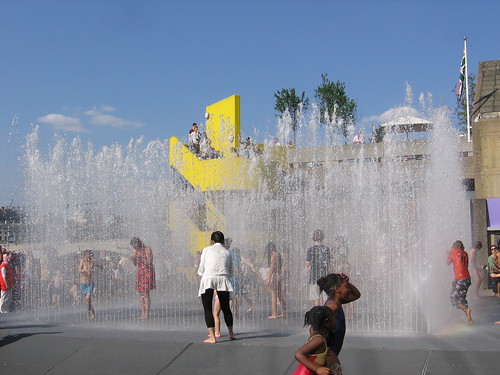
The weather had drawn out the crowds, and the permanent "Appearing Rooms" fountains were particularly attractive to lots of delightedly-screaming children (I'm also posting here a video taken some years ago, to show how they work as a puzzle, as well as just soaking people):


A good time was being had by all, but it's all a bit small-scale by the standards of 60 years ago. These days, fun for its own sake is so much more available, it would be hard to achieve the impact of the original:

Tuesday, 12 April 2011

I did say it wouldn't be long before there were lambs at the Mudchute City Farm. Prepare to go "aah" (or, if you're so minded. "Ah, Bisto!"):


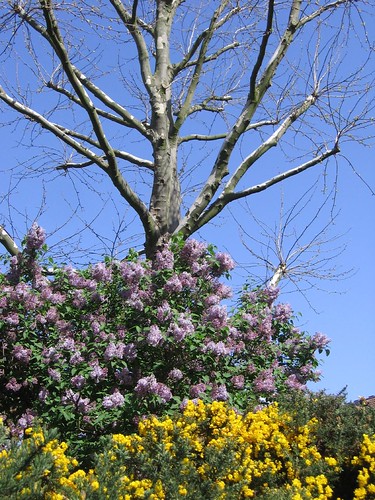
Meanwhile, in other local nature notes, we now have lilacs out:


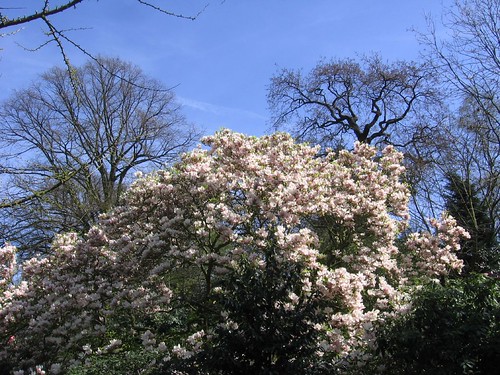
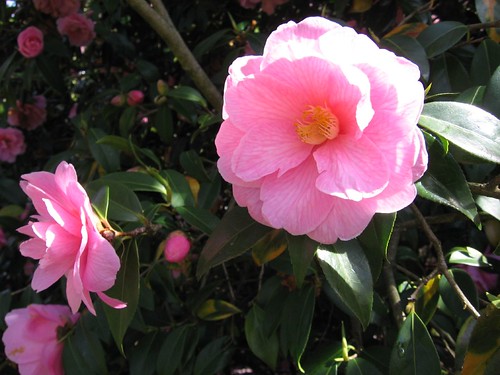
while over in Greenwich Park, the sun is bringing out the first azaleas to compete with the magnolias, camellias and daffodils:


Sunday, 3 April 2011

New life

Spring is coming together, seemingly in more of a rush than it usually does.

Now that my last contract has come to an end, I can consider myself starting an new life of retirement.

Time for a stroll around, with no particular target or deadline.

Unlike the birds making making use of nesting rafts and stray rubbish along the wall of Millwall Dock:


The coots (who always seem to breed early and often) have produced a first stumbling ball of fluff, who will, no doubt, quickly become as big a bully as the rest of them:
The city farm is still waiting for the first lambs to be gambolling around the field (but judging by the bleating from one of the sheds, that may not be too long a wait).

A surprise exhibit by the pig-pens is this example of what you would have found here 70 years ago -a battery of anti-aircraft guns to defend the docks (indeed, for a few weeks in late 1939, my father was here as part of the team working a gun just like this).
Some enthusiasts hope to show it in its historical context, some of which you can still read in the arrangement of mounds and concrete trackways around the fields and allotments.

Though the eye tends to be struck more by the contrast of farm and finance:

Sunday, 27 March 2011

Whether it's the sign of a hard winter gone or a good summer to come, the ornamental cherries around our way are looking particularly opulent at the moment:

Saturday, 26 March 2011

Goodness me, nearly a fortnight and I never finished writing up What I Did On My Holidays (or, rather that weekend in Paris). This is partly a matter of being out of touch with the news, which somehow made the images from Japan all the more shocking and somehow shaming when I did see them (by a strange coincidence I was on a train to Paris the morning of 7/7 and frivolled the day away in blissful ignorance); and partly to do with just the business of everyday life.

But back to Paris: I had no particular plans this time, but I did drop in to a couple of the free city museums that I hadn't seen before. The Cognacq-Jay is a collection of 18th-century art and furniture assembled by the founders of the Samaritaine department store, originally set up for the edification of the staff, and now housed in a restored 18th century house in the Marais. To judge by the photographs and portraits, M. Cognacq rather enjoyed being a public benefactor; Mme Cognacq-Jay rather had the look of the traditionally watchful wife in a family business. I didn't gain much impression of the reaction of the store's staff, or whether they thought them more benevolent owners than their successors (who closed the store down and sold the building off for development at very short notice, not so long ago).

It's an interesting collection, not as stuffily worthy or full of mimsy floweriness as I feared it might be: on the contrary, some lively portraits, some wonderful marquetry and other furniture, and intricately beautiful Meissen figurines. I'm not quite sure if it was meant as a joke that a corridor full of genre paintings aabove a line of small tables and cupboards was simply described as showing how furniture like that might have been used in domestic settings: for if you look at the paintings, a hastily sketched table or bedside cupboard is merely incidental to various saucy shenanigans. Here's a gentleman peeking round a lady's boudoir door, or hurriedly hiding in her wardrobe while her husband swaggers in, or stretching his riding crop in through an open window to lift the scarf from a sleeping lady's generous embonpoint; or there's a kitchen maid with an apron-full of eggs embraced by a scullion whose breeches are clearly round his ankles while the cat devours the fowl laid out for dinner. Did Mme Jay approve?

I also went down to the twin museums at the Gare Montparnasse dedicated to the General Leclerc and Jean Moulin, the heroes of the Liberation and the Resistance, respectively. Around the outsides, an overview of what was happening generally in their respective fields (building up the Free French armies, and the internal politics of collaboration and resistance), in the centre show cases of documents and videos of reminiscences, much of it now very familiar from TV documentaries. One of the most striking things to me was the extraordinarily old-fashioned way André Malraux, as Minister of Culture, intoned his speech when opening a memorial to Moulin in the 1960s. Old films suggest that was what high-flown French orators used to do as a matter of course; but by then it must have been starting to look ridiculous. As I left, the receptionist showed just what a sense of humour you can find in France: I said I'd come to collect the backpack I'd left with her, and without a pause and with the most deadpan face she simply said "Oh that? I've sold it".

Friday, 11 March 2011

Plus ça change..

Once upon a time, if you went to a French post office to get stamps for postcards, you could find yourself in a queue to speak to a harassed desk clerk. So as a gesture to customer service they brought in handy machines, as they did in Britain and no doubt everywhere else, so you could get your own - later upgrading these to computer-generated labels for all the different values. Nowadays (so they must be thinking), who needs one or two stamps for postcards, when there's email and Facebook and the like? Instead, the self-service machines are for fancy functions, like recorded deliveries, registered post, money transfer and banking. If you're the type of Luddite who might want the odd stamp for a friend without Facebook (yes, they do exist), there's a Captain Peacock (or Mrs Slocombe) type of greeter who directs you to a queue for a desk clerk, who turns out to be rather harassed, having to show a willing but rather slow trainee the right drawer to hunt around in for a stamp, and how to operate the till to take the money for it - all in the name of customer service. No wonder I left my shopping behind there...

Not the greatest return to the City of Light; nor is the realisation that other changes are afoot. In the Marais, blandification through the arrival of more and more upmarket generic shops for toiletries, clothes, jewellery and accessories seems to be gathering pace - chic, pretty and unmemorable.

One particular favourite, a shop selling antique musical instruments, has gone. Still, that's the way of the world.

Not that these things are without a touch of imaginative frivolity that could only be French. How many opticians elsewhere have a window like this, for example?

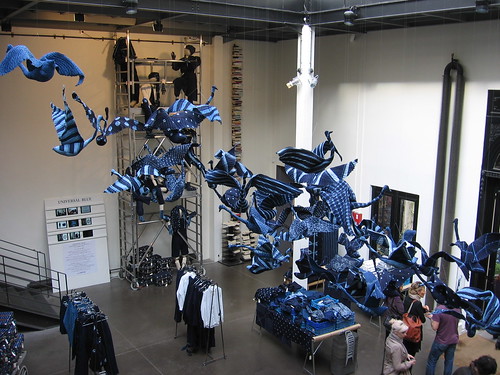
Elsewhere, the impossibly pretentious Merci has decided that blue is the thing:


And the graffiti artists are as impenetrable as ever:

Tuesday, 8 March 2011

Photos, feathers and frills

You might think, on hearing that the Victoria and Albert were inviting people to send in photos for a database on wedding fashion, that there would be too many to choose from.

For them perhaps, once they're deluged with photos; but it's surprising how those heaps (in my memory) of old photos and albums, stuffed randomly into drawers over the decades, turn out to amount to no more than a medium-sized box or two - at least for photos up to about the 1960s. In the five years I've had a digital camera, I've probably accumulated more images than all the decades-worth I've inherited from my parents and grandparents.

We forget how rare photographs could be (especially the ones worth keeping). The vague memory of some enormous piece of cardboard covered in Edwardian frills and huge feathered hats has to give way to the reality of a couple of faded, rather dog-eared, rather small photographs on the verge of fading out altogether. But another wonder of digital technology is that a little bit of fiddling with the scan of what looked like a bleached-out, "soot and whitewash" print uncovered ghostly traces of carefully goffered frills.

So now my grandparents and some of their families, as they were in August 1902, are preserved in a museum (so too are my parents in the run-up to the Second World War - much less photogenic neat and reuseable daywear that would be no more than stylishly "retro" today).

In 1902, everyone looks rather more grimly determined than joyful: but there's a clue to that, in the rather dull light and the fact that my grandmother's image is slightly blurred. They must have had to hold position for rather longer than today's point-and-push, on-the-fly, snapshots require.

A not very scientific sample of submissions to the database include comments, not so much on the fashions (what's to say?) as clues to social and family histories. In their group photo, my grandparents have yielded pride of place to the senior members of their families: my grandmother's aunt, my grandfather's mother, and his brother-in-law's father (who seems to have been acting a sort of substitute father for the occasion).

It's noticeable, and entirely explicable from family legend, that my grandmother's stepmother is definitely NOT there. Other stories would be sparked off by pulling this photo from the drawer: that the formidable-looking Aunt Sarah Corke was wont to limp on to buses with a winning smile and ask if any kind gentleman would give up his seat "to a lady with a Corke leg", and that among the imposingly behatted ladies is "Auntie Nan, who sneezed at the wrong moment and flushed away her dentures".

Such stories, like the frills, fade over time: but, as ever, there's a digital solution to that too, in "legacy" websites and "companion" software to keep track of family photos, videos and memories. The mind just boggles at the thought of the data storage required - and the future digital equivalent of all those holiday slideshow evenings: not so much Big Brother as Big Granny and Big Grandpa, available worldwide, 24/7. So long, of course, as someone keeps up the subscription: how do Flickr and Facebook and the like keep up as members die off - what happens to what they've posted, and are their executors reminded to inform all the websites they've subscribed to?.

Overheard..

"..my other favourite mass-murderer....."

Sometimes I wonder about my colleagues.

Monday, 7 March 2011

Yellow

Not my favourite colour - it always seems to be either sickly or strident: the latter being the reason why it's used in warning signs. For the same reason, presumably, the early spring flowers tend to be yellow - they attract the attention of pollinators by standing out against winter's mud colours and the grey of a misty, rainy day.

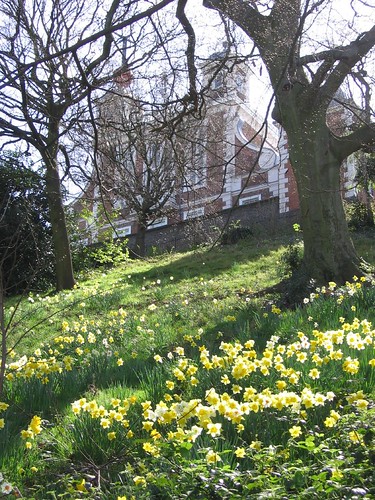
Perhaps it's because of a long cold winter, but this year, our local examples seem to be even more intensely yellow than ever: